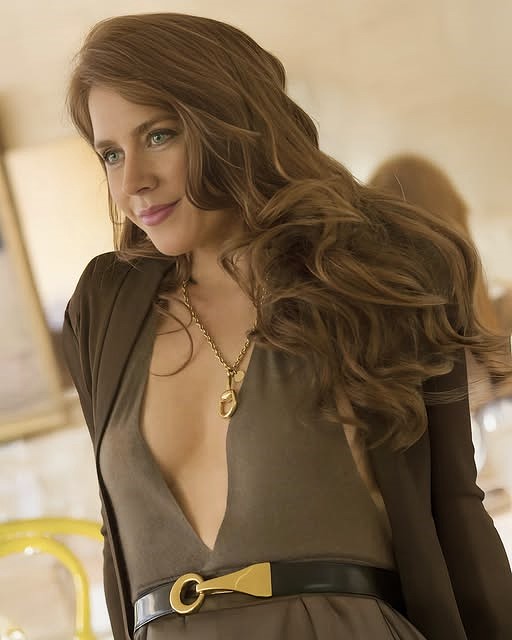
From Fairy Tales to Fierce Roles: The Actress Who Turned Magic Into Mastery

It’s hard to believe that the actress once singing to pigeons in a ball gown on a New York sidewalk would later command the screen in some of the most emotionally complex dramas of the 21st century.
Yet that’s the story of Amy Adams — a performer whose journey from Disney fairy tales to Oscar-caliber performances is a testament to talent, tenacity, and transformation.
Born in Vicenza, Italy, in 1974, while her American father was stationed there with the U.S. Army, Amy Lou Adams grew up in a large, close-knit Mormon family in Colorado.
Her early years were far from the glitz of Hollywood — modest, musical, and full of imagination. She once dreamed of becoming a dancer, performing in local theater and dinner shows before her acting ambitions took hold. Those humble beginnings, she’s often said, gave her the grounding that would later shape her work ethic and emotional authenticity on screen.
After years of working in regional theater and bit television parts, Adams’s first real breakthrough came in 1999 with Drop Dead Gorgeous, where she played a spirited cheerleader opposite Kirsten Dunst and Denise Richards.
Though it didn’t catapult her to instant fame, it offered a glimpse of what she could do — a combination of humor, warmth, and an undercurrent of steel. Her big moment would come a few years later.
In 2005, she starred in Phil Morrison’s Junebug as Ashley, a wide-eyed, endlessly optimistic pregnant woman who sees the best in everyone. It was a revelation. Critics hailed her as a fresh, radiant presence, and her performance earned her first Academy Award nomination for Best Supporting Actress.
Suddenly, the industry — and audiences — realized that behind the sweetness was an actress of rare emotional depth.
Then came Enchanted (2007), the film that turned her into a household name. Playing Giselle, a storybook princess who finds herself in modern-day Manhattan, Adams balanced comedy, sincerity, and musical charm in a performance that could have easily tipped into caricature.
Instead, she made it timeless. Her Giselle wasn’t just funny or pretty — she was sincere, brave, and brimming with heart. Disney had found its perfect real-world princess, and Amy had found her place in Hollywood.
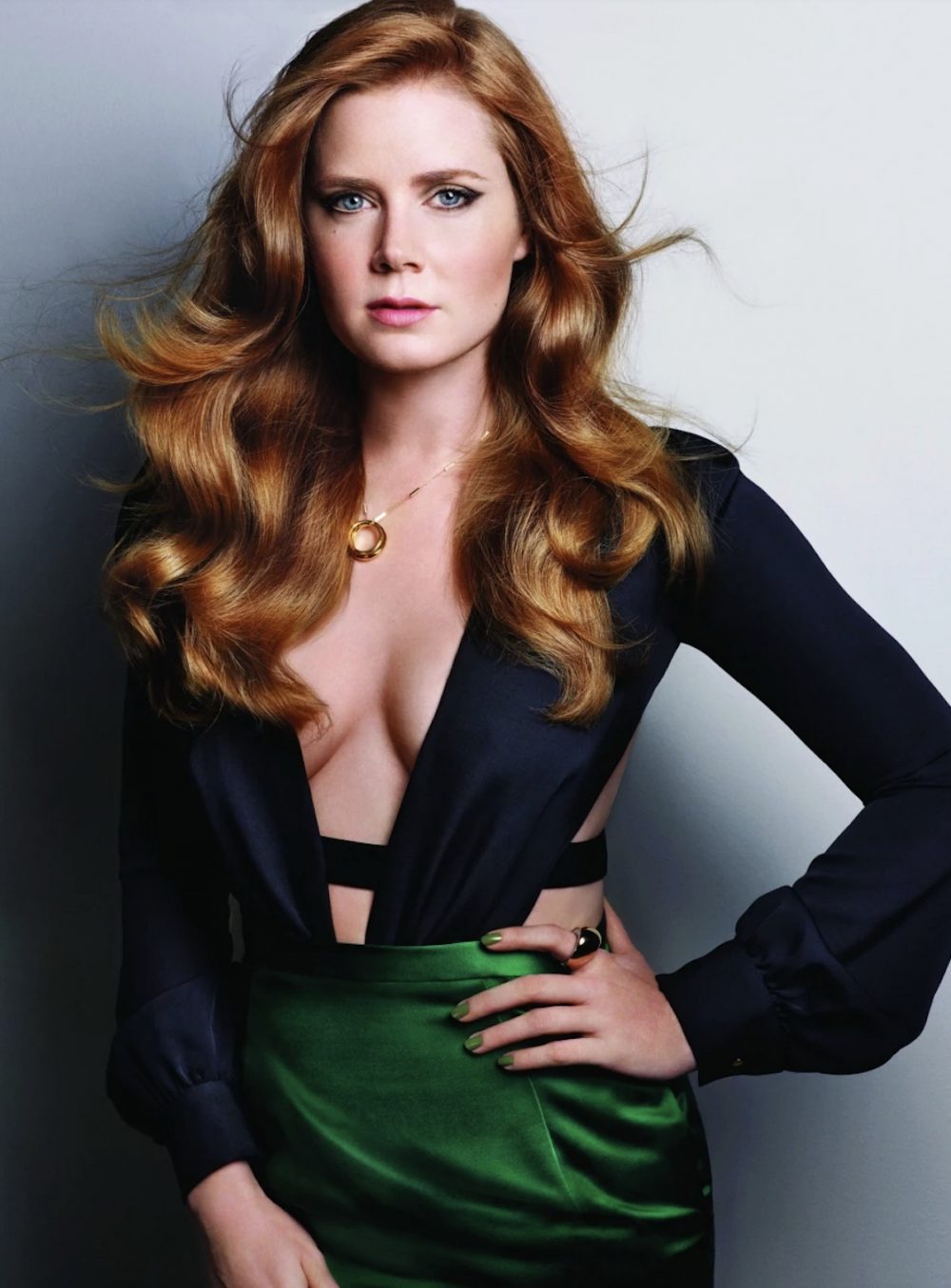
But Adams refused to be confined to fairy tales. Over the next decade, she built one of the most diverse and acclaimed filmographies of her generation. In Doubt (2008), she held her own alongside Meryl Streep and Philip Seymour Hoffman as a young nun torn between faith and moral uncertainty.
In The Fighter (2010), she transformed into a tough, working-class bartender — fiery, flawed, and unforgettable — earning her third Oscar nomination. Each role was different, yet unmistakably hers: nuanced, layered, deeply human.
Her collaborations with director David O. Russell (The Fighter, American Hustle) and with filmmakers like Spike Jonze (Her) and Denis Villeneuve (Arrival) showcased her astonishing range.
She could play the polished, seductive con artist Sydney Prosser one year and a linguist decoding alien language the next — and make both feel equally believable.
Her sixth Oscar nomination, for
Vice (2018), as Lynne Cheney, was a masterclass in subtle control — a portrait of ambition wrapped in ice.

What makes Amy Adams so remarkable is her ability to disappear into her roles without ever losing that sense of warmth that seems uniquely hers.
Whether she’s playing a fairy-tale heroine or a mother haunted by trauma, she brings a truthfulness that resonates beyond the screen.
There’s a quiet power in her performances, a refusal to oversell emotion. She lets the audience come to her — and we always do.
Outside the screen, Adams is known for her humility and grace. Despite her fame and accolades, she remains one of Hollywood’s most grounded stars. She’s been married to artist Darren Le Gallo since 2015, and together they have a daughter, Aviana.
Family, she often says, is her true anchor — the space where she can simply be herself, away from the cameras and red carpets.
In interviews, she’s refreshingly candid about her insecurities and struggles with self-doubt, admitting that she sometimes worries about being “too nice” in an industry that rewards edge.
Yet that very kindness — that authenticity — may be her greatest strength. It’s what allows her to play both angels and antiheroes with the same conviction.
When asked how she chooses her roles, Adams once said,
“I’m drawn to people who are searching — for meaning, for connection, for redemption.
Because that’s what life is, isn’t it?” That sentiment runs through all her best performances — women trying to make sense of their world, finding grace even in chaos.
Today, with six Oscar nominations, two Golden Globes, and countless acclaimed roles, Amy Adams has achieved something few actors manage: longevity built on substance.
She’s never been defined by scandal or spectacle, only by her work — and that work has consistently elevated the art of acting itself. She embodies the rare combination of star power and craftsmanship, charm and courage.
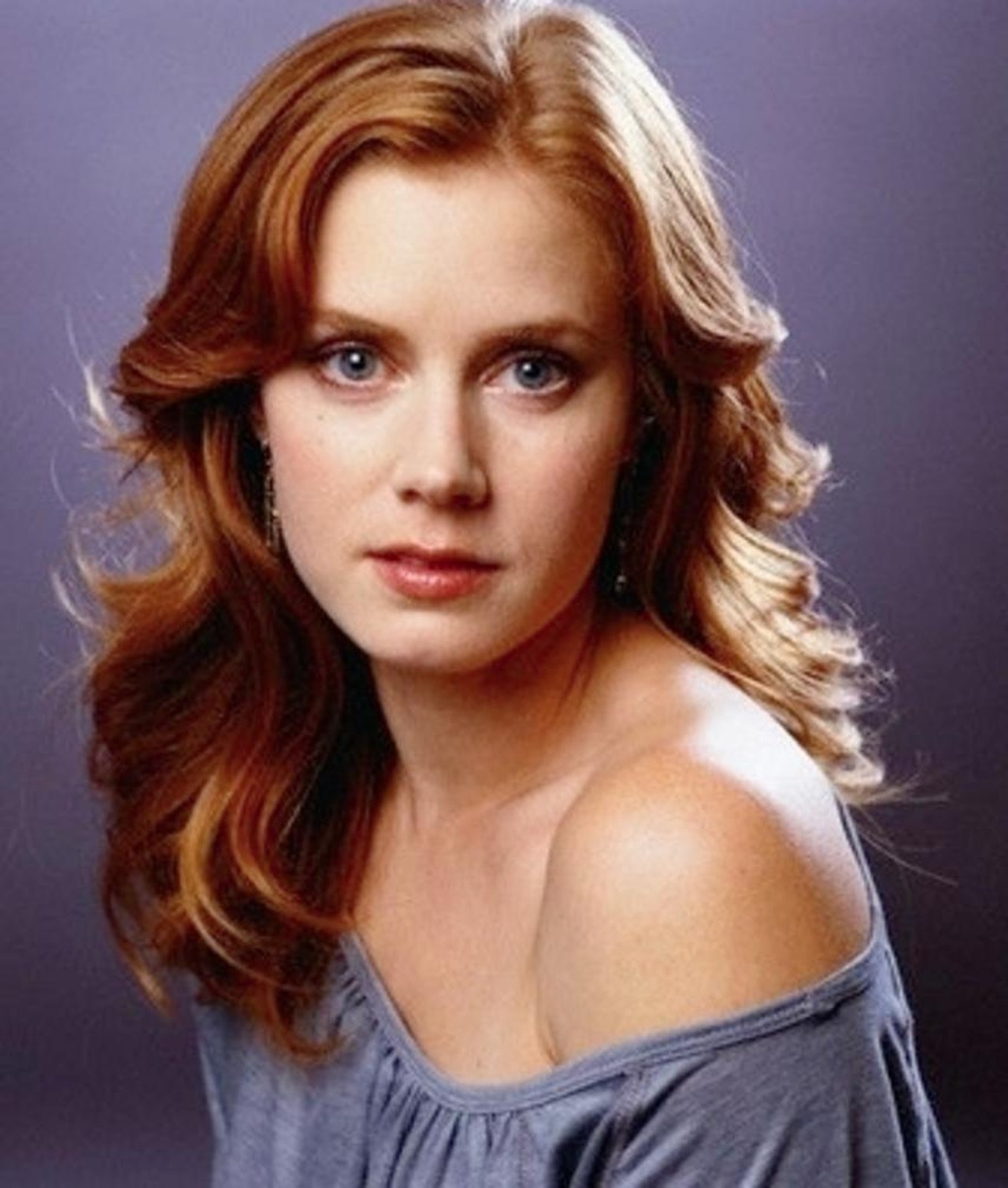
Looking back, it’s easy to trace her evolution — from the radiant princess of Enchanted to the haunted linguist of Arrival, from bright-eyed innocence to quiet authority.
Yet through it all, the essence of Amy Adams remains constant: a performer who reminds us that sincerity and strength can coexist, that vulnerability can be powerful, and that talent, when paired with grace, never fades.
She may not have taken home an Oscar yet, but in many ways, she’s already won something far more lasting — the respect of her peers, the admiration of audiences, and a place among the greatest actors of her generation.
And like her most famous song once promised, she’s still “getting what she’s wishing for.”
who is the torch-lit nightclub singer who shrieked her way through a booby-trapped adventure with a certain fedora-wearing archaeologist?
There are few Hollywood stories as fascinating—or as gracefully transformative—as that of Kate Capshaw, the actress who once lit up the screen with a torch, a scream, and undeniable charm alongside one of cinema’s most iconic heroes. To moviegoers around the world, she’ll forever be remembered as Willie Scott, the glamorous nightclub singer who stumbled (and shrieked) her way through danger in Indiana Jones and the Temple of Doom (1984). But that chapter, dazzling as it was, was only the beginning.
Born Kathleen Sue Nail in Fort Worth, Texas, in 1953, and raised in Missouri, Capshaw didn’t originally set her sights on Hollywood. She earned a degree in education from the University of Missouri and began her career as a special education teacher. Acting wasn’t the plan—but, as in all great stories, destiny had other ideas. After moving to New York City, she began taking acting classes and found early work in commercials and soap operas, slowly learning the craft that would make her a star.
Her screen debut came in 1982 with the television movie The Edge of Night, but her true breakout arrived just two years later when she was cast in Steven Spielberg’s Indiana Jones and the Temple of Doom. As the dazzling torch-lit singer Willie Scott, Capshaw brought humor, vulnerability, and unfiltered energy to the role.
With her golden curls, glittering gowns, and unforgettable shrieks, she became an integral part of the film’s pulpy charm. Though her character’s comedic fearfulness divided critics at the time, audiences adored her. Beneath the chaos and comedy, Capshaw infused Willie with a humanity that made her more than just comic relief—she was a woman out of her depth, learning courage the hard way.
Off-screen, Temple of Doom changed her life forever. On set, she met Steven Spielberg, the film’s director, who was already one of Hollywood’s most powerful figures. Their professional collaboration blossomed into a partnership built on love and mutual respect. The two married in 1991, forming a close-knit blended family that included seven children.

Though her marriage to Spielberg put her in the public eye in a new way, Capshaw continued to work and evolve as an actress. She appeared in Dreamscape (1984), SpaceCamp (1986), and Black Rain (1989), proving her versatility across genres—from science fiction to psychological drama. In SpaceCamp, she played an astronaut-in-training, reflecting the decade’s fascination with space exploration, while Black Rain showed her in a darker, more intense light under the direction of Ridley Scott.
Capshaw’s later work, such as Love Affair (1994) opposite Warren Beatty and Just Cause (1995) with Sean Connery, displayed her range and depth, but as the 1990s progressed, she began to feel the pull of a quieter, more personal creative life. Acting had given her fame, but she was searching for fulfillment.

By the early 2000s, Capshaw had largely stepped away from the spotlight to focus on her family and explore new artistic horizons. What began as a private hobby soon evolved into a full-fledged second career: painting.
Her work as an artist revealed a side of Capshaw that few had seen before—introspective, soulful, and profoundly human. She focused primarily on portraiture, painting faces that conveyed emotional depth and vulnerability. Her subjects often embody strength, complexity, and quiet dignity—echoing the empathy and curiosity that had always defined her as a performer.
Her portraits began gaining attention in galleries and exhibitions, eventually earning her recognition from major art institutions. Critics praised her for her raw and expressive style, as well as her ability to capture not just a likeness, but the essence of her subjects. Her art became a new form of storytelling—one that didn’t rely on dialogue or direction, but on light, texture, and emotion.

For Capshaw, painting wasn’t about fame or accolades—it was about connection. “I’m fascinated by people’s faces,” she has said in interviews. “There’s a story behind every line, every expression. Painting gives me a way to understand that story.”
Today, her artwork hangs in respected galleries and museums, solidifying her place not only as an actress of the past but as a contemporary artist of note.
Her journey from film sets to art studios mirrors the evolution of a woman who refused to be defined by one chapter of her life. She moved seamlessly from Hollywood glamour to creative introspection, trading red carpets for canvases and finding authenticity in the process.
Beyond her art, Capshaw has also remained deeply committed to philanthropy and advocacy. Alongside Spielberg, she supports numerous charitable initiatives focused on education, social justice, and humanitarian aid. She is known for her humility and thoughtfulness—preferring to work quietly behind the scenes rather than in the public eye.

Despite decades in the entertainment industry, Capshaw has never courted celebrity for its own sake. Those who know her describe her as grounded, compassionate, and fiercely intelligent—a woman who has embraced life’s changes with courage and grace.
Now, at 72, Kate Capshaw continues to live creatively, painting, traveling, and enjoying time with her family. She has built a life that reflects both her early ambition and her later wisdom: a life where art and empathy coexist.
From the dazzling chaos of Temple of Doom to the tranquil clarity of her art studio, Capshaw’s story is one of reinvention—a reminder that a woman’s true masterpiece is not her most famous role, but the life she shapes beyond it.
Once she was the torch-lit nightclub singer who screamed her way through collapsing temples and chaotic adventures; now she is the quiet observer, translating the human soul into color and form. Her journey from Hollywood icon to respected artist is proof that reinvention isn’t about leaving the past behind—it’s about expanding it.
