Part 1
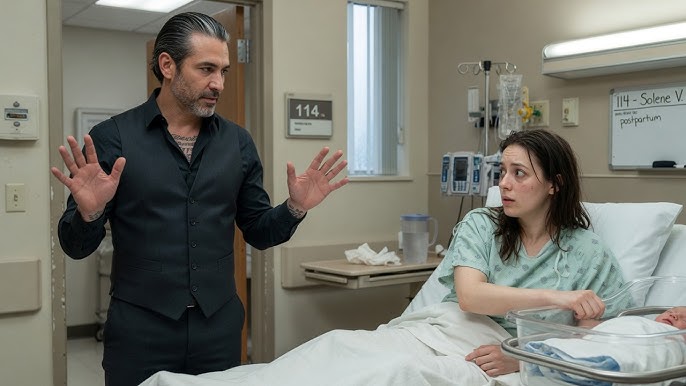
I never expected to see my ex-husband at the foot of my hospital bed while I was in labor.
Especially not at 3:17 in the morning, under the cruel white lights of St. Mary’s Regional Medical Center in Clarksville, Tennessee, with rain ticking against the window and my best friend Dana holding a cup of ice chips like she was ready to throw them at somebody.
The contraction hit so hard my fingers locked around the bed rail.
“Leah, breathe,” Dana said.
“I am breathing,” I snapped, which was a lie. I was panting like I had sprinted uphill in combat boots.
The room smelled like antiseptic, plastic tubing, and that burnt hospital coffee nurses seem to survive on. A monitor kept beeping near my shoulder. Somewhere outside the door, rubber soles squeaked across polished tile. I had planned for a quiet delivery. Different hospital, different doctor, no familiar faces except Dana’s.
Plans, I’d learned, were just invitations for life to laugh.
Nurse Rachel, young and freckled and trying hard not to look worried, adjusted a strap across my belly. “Baby’s heart rate dipped again. The doctor is coming.”
“Great,” Dana muttered. “Tell him to come faster.”
Then the door opened.
For half a second, I thought pain had finally broken something in my brain.
Dr. Evan Mercer stepped into the room wearing navy scrubs, a white coat, and the same controlled expression that once made me believe nothing bad could happen as long as he was nearby.
My ex-husband.
The man who had signed divorce papers seven months ago because his mother had convinced him I could never give him a family.
Evan stopped so suddenly Rachel almost ran into his back.
The color drained from his face.
Nobody moved. Nobody spoke. Even the machines seemed to lower their voices.
Dana turned slowly, saw him, and said, “Oh, you have got to be kidding me.”
Evan’s eyes moved from my face to my swollen belly, then back again. The math appeared behind his eyes before he said a word. Seven months divorced. Thirty-seven weeks pregnant. A baby coming now, whether either of us was ready or not.
“Dr. Mercer?” Rachel asked carefully.
He blinked, but he didn’t look away from me. “Vitals?”
Professional instinct saved him from being a man for a moment. He crossed the room, took the chart, and read fast. I hated that I noticed his hands were still steady. I hated more that some ancient part of me felt safer when he stood close.
“Blood pressure’s climbing,” Rachel said. “Two decels in the last twenty minutes.”
Another contraction tore through me. I groaned and squeezed my eyes shut. Dana grabbed my hand.
Evan leaned closer, his voice lower. “How long have you been contracting?”
“Six hours,” I said through my teeth.
His jaw tightened. “You waited six hours?”
Dana stepped forward. “She didn’t wait. She tried to be tough because people like you taught her pain only counts when someone else approves it.”
I would have laughed if I hadn’t been busy trying not to split in half.
Evan looked at the monitor. The baby’s heartbeat dipped again, a small frightening drop on the screen. The room changed. Personal history vanished beneath medical urgency.
“Call anesthesia,” Evan said. “Prep a team. We may not have time to play this slow.”
I grabbed his sleeve before he could turn away. The fabric was warm under my fingers.
“Don’t ask me anything right now,” I whispered.
He looked at my hand, then at my face.
For a second, he wasn’t my doctor. He was the man who used to kiss my forehead before leaving for night shifts. The man who knew I hated thunderstorms. The man who had let me walk out of our house with two duffel bags and a box of medals while his mother stood in the hallway pretending not to smile.
“I won’t,” he said.
Then the monitor gave a sharper alarm, and Evan’s expression hardened into something I recognized too well.
He was scared.
And if Evan Mercer was scared, then something was worse than he wanted me to know.
Part 2
The next twenty minutes came at me in flashes.
Rachel lowering the bed. Dana’s hand clamped around mine. Evan giving orders in that clean, calm doctor voice that used to make nurses trust him and made me believe he could fix anything.
“Stay with me, Leah.”
“I’m right here,” I said, though I wasn’t sure that was true. Part of me floated somewhere above the room, watching my own life turn ridiculous and terrifying.
Rain blurred the window. The fluorescent lights buzzed overhead. My hospital gown stuck to my back. Every sound was too loud: the monitor, the wheels of a cart, Dana whispering, “You’re doing great, honey,” like she didn’t want to admit she was terrified.
Evan checked the screen again. His mouth tightened.
“What?” I demanded.
He hesitated half a breath too long.
“Evan.”
“Baby’s not loving this,” he said. “But we’re not done yet.”
There it was. The old partnership, stripped down to survival. I nodded once because I knew that tone. Mission not over. Keep moving.
When the urge to push came, it came like my body had stopped asking permission. I screamed. Dana cried. Rachel told me where to breathe. Evan stayed focused, but I saw the muscle jumping in his cheek.
“Look at me,” he said.
“I don’t want to look at you.”
“Too bad.”
I opened my eyes. His were gray-blue, sharp with fear and something else he had no right to feel.
“One more,” he said. “Leah, give me one more.”
I hated him for saying my name like he still had a claim on it.
I pushed.
The world narrowed to pain, pressure, and then a cry.
Small. Angry. Alive.
The sound cut through the room like a match in darkness.
My son was here.
Everything inside me broke open at once. I started sobbing before Rachel even placed him on my chest. He was slippery and warm and furious, with a scrunched red face and tiny fists already fighting the blanket.
“Hi,” I whispered. My voice sounded wrecked. “Hi, baby.”
Dana was crying into a paper towel. “He’s perfect. Leah, he’s perfect.”
Evan stood at the side of the bed, holding the clamp scissors he had already forgotten were in his hand.
He stared at the baby.
Not like a doctor.
Like a man watching a ghost breathe.
My son opened his eyes for one brief, unfocused second. They were newborn-dark, but the shape was Evan’s. So was the little crease in his chin. So was the stubborn line of his mouth, the same line I had once traced with my thumb on Sunday mornings.
Evan saw it too.
His hand trembled.
Rachel took the baby for a quick check. He screamed like he had legal objections. When she brought him back, wrapped in a white blanket with blue and pink stripes, Evan reached as if to help, then stopped himself.
I took my son against my chest and covered the back of his head with my palm.
For one full minute, nobody said the thing filling the room.
Then Evan whispered, “Leah.”
“No.”
His eyes glistened. “I have to ask.”
“You really don’t.”
Dana shifted closer, ready to block him with her whole body if needed.
Evan swallowed. “Is he mine?”
The question landed softly, but it cracked something anyway.
I looked down at my son. Caleb. I had chosen the name at two in the morning with my feet swollen and a bowl of cereal balanced on my belly. A name that meant faithful, because I needed one person in this world whose love would not be negotiated at a dining table.
I looked back at Evan.
“He’s my son,” I said. “Whether you become his father is a different question.”
Before Evan could answer, perfume drifted into the room.
Gardenias.
Expensive. Heavy. Familiar.
A woman’s voice sliced through the doorway.
“Well,” Marlene Mercer said, “isn’t this convenient?”
Part 3
Before I tell you what happened when my former mother-in-law stepped into that delivery room, you need to understand how a woman like me ended up married to a man like Evan Mercer.
I met Evan at a veterans’ health fundraiser outside Nashville. I was thirty-four, still active duty, working with a family support program near Fort Campbell. He was thirty-seven, a doctor with sleeves rolled up, taking blood pressure readings under a white tent while country music played too loud from a speaker near the raffle table.
He smiled at me after I corrected a volunteer on how to lift a supply crate without destroying his spine.
“You military?” he asked.
“Is it the boots or the bossiness?”
“The way everyone listened.”
That was Evan’s gift. He made observation feel like attention.
Our first date was barbecue at a roadside place with sticky tables and framed Titans jerseys on the wall. He listened when I talked about deployments. He didn’t flinch when I mentioned panic attacks after loud noises. He told me about residency, his father dying young, and his mother raising him like he was both miracle and investment.
“Marlene can be intense,” he said, dipping fries into ranch dressing.
“I’ve led convoys through dust storms,” I said. “I can handle intense.”
He laughed.
I loved that laugh first.
Eight months later, we married in a small church with white flowers, a reception in the fellowship hall, and Marlene wearing champagne satin that looked suspiciously close to bridal. I ignored that. Women like me are trained to ignore small discomforts until they become weather.
The first year was good.
Not perfect. Good.
We bought a brick house with a sloped front yard and a mailbox Evan kept meaning to repaint. Saturday mornings smelled like cut grass and coffee. We argued about paint colors, grocery budgets, and whether chili should have beans. We watched football on the couch until one of us fell asleep.
I thought peace was supposed to feel ordinary.
Then we started trying for a baby.
At first, it was sweet. Evan would kiss my shoulder and talk about little league, science fairs, messy kitchens. I kept a tiny pair of yellow socks in my nightstand because buying them felt like faith.
Months passed.
Then a year.
Then two.
People began asking questions at church, at the grocery store, at hospital fundraisers. “When are y’all having kids?” “What are you waiting for?” “Don’t wait too long, honey.”
Nobody meant harm, which somehow made it harder to hate them.
I tracked everything. Temperatures, calendars, vitamins, appointments. I treated my body like a mission map. My doctor ordered tests. Bloodwork. Imaging. Consultations. Every result came back normal.
I remember sitting in my truck outside the clinic, the paper trembling in my hand, feeling relief so sharp it almost hurt.
I called Evan.
“Everything looks okay on my side,” I said. “They said you should schedule your testing next.”
Silence.
Then he said, “Yeah. Of course.”
But he didn’t.
The first excuse sounded reasonable. Work schedule. Then insurance. Then an emergency rotation. Then, “Let’s not turn our marriage into a science project.”
Marlene started making comments around the same time.
At Sunday dinner, she would pass me mashed potatoes and say, “Some women are built for careers. Some are built for homes.”
Evan would stare at his plate.
I told myself he hated conflict. I told myself silence was not betrayal.
Then one Sunday, Marlene placed a tiny porcelain baby shoe beside Evan’s plate.
“It was his,” she said, smiling at me. “I kept it for my first grandchild.”
The roast smelled like rosemary. The silverware shone under the chandelier. Evan’s fork stopped halfway to his mouth.
Marlene looked straight at me.
“Shame when family treasures have nowhere to go.”
I waited for my husband to speak.
He took a sip of water instead.
That was the first time I heard something crack, though back then I still thought it was just my heart.
Part 4
After that dinner, I became obsessed with proof.
Not because I wanted to win. Marriage should not be a courtroom. I wanted to stop feeling like I was being tried in one.
I made folders. A blue one for my test results. A green one for insurance. A yellow one for appointment notes. Dana called it my “baby war room” and pretended to joke, but her eyes always softened when she saw the charts taped inside my pantry door.
Evan hated the folders.
“You’re stressing yourself out,” he said one night, standing in the kitchen with his tie loosened and his phone buzzing on the counter.
“Answers would lower my stress.”
He rubbed his forehead. “I’m not avoiding it.”
“Then schedule the appointment.”
“I said I would.”
“You said that four months ago.”
The refrigerator hummed between us. Rain tapped the back window. He looked exhausted, but not guilty. That was what fooled me. Guilty people are supposed to look like villains. Evan looked like a tired man who wanted one hard conversation to disappear.
Marlene filled the silence he left.
She gave me articles about “natural womanhood.” She invited me to baby showers for cousins I barely knew. She told church ladies I was “very focused on my career,” which is Southern for “selfish, but bless her heart.”
Then Whitney Bell entered the picture.
Whitney sang in the church choir, wore soft sweaters in pastel colors, and had the kind of sweetness people trust because it never raises its voice. She was recently widowed, with a three-year-old daughter and a casserole dish always ready for someone’s grief.
Marlene adored her.
“Whitney understands family,” she said after one service while Whitney helped stack hymnals nearby. “Some women just naturally do.”
Evan heard her. I watched his face.
Nothing.
That night I found him in the garage, sitting in his truck with the door open and the engine off. His phone screen glowed in his lap.
“You and Whitney?” I asked before I could stop myself.
His head snapped up. “What?”
“Are you seeing her?”
“No.” He looked honestly offended. “Leah, no.”
I believed him. That was the problem. Evan rarely lied directly. He just left enough empty space for someone else’s lie to move in.
Two weeks later, I got my first real clue.
I had dropped my earring under the passenger seat of his truck after dinner. While Evan carried leftovers inside Marlene’s house, I reached beneath the seat and pulled out my earring, a gum wrapper, and a folded white envelope.
Cumberland Reproductive Medicine.
The envelope had Evan’s name on it.
My heart began to pound.
I didn’t open it. I wish I could say that was because I respected privacy, but the truth was worse: I was scared. Scared the paper would say he was fine. Scared it would say he wasn’t. Scared it would explain why my husband looked haunted every time I said the word appointment.
The porch light flickered.
Evan opened the front door and saw the envelope in my hand.
For one second, his face changed.
Not anger. Panic.
He crossed the yard fast. “Where did you get that?”
“Under your seat.”
“Give it to me.”
“Is this from your testing?”
He took the envelope from my hand too quickly. “It’s nothing.”
“Then show me.”
“No.”
One word. Flat and final.
Behind him, through Marlene’s dining room window, I saw her watching us with a dish towel in her hand.
Her expression wasn’t confused.
It was afraid.
That was when I understood something was being hidden from me.
I just didn’t know yet that the secret had already eaten my marriage from the inside.
Part 5
The divorce did not arrive like thunder.
It came like mold.
Small spots first. A missed dinner. A cold shoulder. Evan sleeping at the edge of the bed like the middle held broken glass. Marlene calling more often. Me answering less.
I kept asking about the envelope.
He kept saying, “Drop it.”
I did not drop it.
One Thursday in March, I came home from base and found Marlene in my kitchen arranging flowers in a vase I had bought in Memphis. Evan stood by the sink, pale and silent.
“What’s going on?” I asked.
Marlene turned with a practiced sigh. “We’re talking about reality.”
Reality, according to Marlene, was that Evan wanted children. Reality was that I had given enough years to “service and ambition.” Reality was that love sometimes meant letting someone go find the life he deserved.
I looked at Evan. “Is that what you want?”
He did not answer fast enough.
The kitchen smelled like lilies. I have hated that smell ever since.
“Evan,” I said. “Do you want a divorce?”
His eyes filled, but his voice stayed quiet. “Maybe we want different things.”
“No,” I said. “We want the same thing. You just don’t want to stand beside me while we figure out why we don’t have it.”
Marlene flinched, just a tiny movement.
Evan saw it.
He still said nothing.
I packed that night. Not everything. Two duffel bags, my uniforms, the yellow socks from the nightstand. Dana came with her pickup and did not ask questions. She just hugged me in the driveway while Evan stood on the porch looking like a man watching a house burn because he had misplaced the hose.
The divorce moved quickly because I was too tired to fight over furniture. Evan kept the brick house. I kept my name, though legally changing it back took longer than I expected. I moved into a small apartment near the interstate where the upstairs neighbor vacuumed at midnight and the bathroom fan sounded like a helicopter.
Seven weeks after I left, I stood in a Walmart parking lot holding a pregnancy test in a plastic bag.
The sun was too bright. Someone’s truck alarm kept chirping. A little boy in a Spider-Man shirt was crying because his mother wouldn’t buy him gum.
I sat behind the steering wheel for twenty minutes before I drove home.
Dana waited in my bathroom while I took the test. She leaned against the sink with her arms folded, pretending not to stare at the little white stick on the counter.
When the result appeared, I stopped breathing.
Positive.
Dana whispered, “Oh my God.”
I sat on the toilet lid and covered my mouth with both hands. I thought I would cry. Instead, I laughed once, a broken little sound that scared both of us.
My first thought was Evan.
My second was Marlene.
My phone buzzed before I could decide what to do. Unknown number. Voicemail.
I played it on speaker.
Marlene’s voice filled my tiny bathroom, smooth as church butter.
“At least now Evan can find a real woman. One who understands a man needs children, not medals.”
The message ended.
Dana’s face went red. “Tell me you saved that.”
I stared at the test in my hand. My whole future had just changed in a bathroom that smelled like cheap soap and fear.
I saved the voicemail.
Then I did something I never imagined doing.
I did not call Evan.
Part 6
Keeping a pregnancy secret is not as dramatic as people think.
Most days, it is paperwork.
It is checking a box that says divorced. It is leaving the father’s information blank while a receptionist avoids your eyes. It is buying ginger tea and crackers at the gas station because morning sickness does not care if you are wearing a uniform.
I told Dana first. Then my commanding officer because I had to. Then no one.
Every appointment felt like both a miracle and a trespass. I watched the first grainy ultrasound on a black screen while a tech named Bonnie pointed out a heartbeat flickering like a tiny porch light.
“There we go,” she said. “Strong little thing.”
I cried silently because I had spent years begging my body for proof it was not broken, and now the proof was waving a limb the size of a bean.
I almost texted Evan that day.
I typed, We need to talk.
Then I deleted it.
Not because I wanted revenge. Revenge has energy. I had none. I had nausea, swollen ankles, and a new fear that wrapped around every happy thought: if I told Evan, Marlene would come with him.
Dana agreed.
“Men can change,” she said one evening over takeout noodles. “But mothers like Marlene? They don’t knock. They invade.”
Still, guilt worked on me.
At night, I lay awake listening to traffic on I-24 and imagined Evan seeing the ultrasound. He would cover his mouth with one hand. He would cry, maybe. He would ask to come to appointments. He would touch my stomach with wonder.
Then the memory would shift.
Marlene at my kitchen table. Evan silent beside her. The envelope snatched from my hand.
I would roll to my side and choose silence again.
At nineteen weeks, I saw them at Kroger.
Marlene stood near the bakery with Whitney Bell, examining a white sheet cake. Evan was a few feet away holding a basket of strawberries, looking as uncomfortable as a man can look in produce.
I froze behind a display of canned pumpkin.
My belly was still easy to hide under a loose jacket, but I felt exposed anyway.
Marlene laughed softly. “Evan deserves a peaceful home this time.”
Whitney murmured something I couldn’t hear.
Evan said, “Mom, stop.”
Not enough. Never enough. But the word still hit me.
Marlene touched his arm. “I’m only saying what everyone knows.”
I left my cart in the aisle and walked out without buying anything. In the parking lot, I sat in my car with both hands on my belly while my son kicked for the first time.
A tiny thump.
Then another.
“Okay,” I whispered. “I hear you.”
That night, I opened the last box from the old house. It was mostly junk: Christmas ornaments, a cracked picture frame, Evan’s college sweatshirt I had meant to throw away.
At the bottom was a folded appointment card.
Cumberland Reproductive Medicine.
Evan Mercer. 9:40 a.m. April 18.
Six weeks before he asked for the divorce.
I sat on the floor until my legs went numb, staring at that date.
The clinic envelope had not been nothing.
And suddenly my secret pregnancy was not the only secret in the room.
Part 7
Marlene did not wait for an invitation to enter my hospital room.
She walked in wearing a cream coat, pearls, and the expression of a woman arriving at a scene she had already judged. Her perfume swallowed the clean newborn smell around Caleb’s blanket.
Dana stepped between us. “Nope.”
Marlene ignored her and looked at my baby.
For one second, just one, her face cracked.
She saw Evan in him.
Then she recovered.
“That child is not a Mercer,” she said.
Evan turned. “Mom.”
“Don’t Mom me.” Her voice trembled, but not with sadness. With rage. “Do you have any idea how this looks?”
I laughed, though my throat hurt. “I just gave birth. Forgive me if I’m not managing your public image.”
Rachel hovered by the door, clearly wondering if she needed security or popcorn.
Marlene’s eyes cut to me. “You disappeared for months, and now you show up with a baby and expect us to believe—”
“I don’t expect you to believe anything,” I said. “You’re not important here.”
That landed harder than shouting would have.
Marlene’s mouth opened, then closed. She was not used to being treated like furniture.
Evan moved closer to the bed, not touching it. “Leah needs rest.”
“Oh, now Leah needs protecting?” Dana said.
He accepted that hit without flinching. “Yes.”
Marlene stared at him as if he had slapped her. “Evan, think. She was living alone. She was working on base. She could have been with anyone.”
The room went cold.
I looked down at Caleb, sleeping with one fist near his cheek, and something calm rose in me. Not anger. Something cleaner.
“You can leave now,” I said.
Marlene stepped closer. “I have a right to know if that is my grandchild.”
“No,” I said. “You have a desire. Rights are different.”
Evan’s head turned toward me. I could feel him hearing the new version of me, the one his silence had helped create.
Marlene pointed at Caleb. “He needs family.”
“He has family,” Dana said. “Try again.”
Evan finally faced his mother fully. His voice was quiet. “Get out.”
Marlene blinked.
So did I.
“What did you say?” she asked.
“I said get out.”
The words were not loud, but they changed the air in the room. For years, I had waited for those exact syllables. Hearing them now did not heal me. It only showed me how easy they had always been to say.
Marlene’s eyes filled with theatrical tears. “After everything I sacrificed for you?”
Evan opened the door. “Not here.”
For a moment, I thought she might refuse. Then she leaned toward him and whispered something I almost missed.
“Don’t make me say what we both know.”
Evan went still.
There it was again. That hidden thing. The same panic from the night of the clinic envelope.
Marlene left with her heels striking the tile like small gunshots.
The door closed.
Evan turned back to me, pale and shaken.
I held Caleb tighter, because whatever Marlene and Evan “both knew,” I had a terrible feeling it explained more than my divorce.
Part 8
I stayed in the hospital for two days.
Two days of nurses checking my blood pressure, Caleb learning to latch, Dana sleeping in a chair with her mouth open, and Evan appearing in the doorway like a man unsure whether he had permission to exist.
He did not push.
That surprised me.
He brought water. He spoke to Rachel about my care. He filled out discharge notes with a face so careful I almost felt sorry for him.
Almost.
On the second afternoon, he stood by the window while Caleb slept in the plastic bassinet. Sunlight came through the blinds in thin gold stripes across the floor.
“I want a paternity test,” he said.
“I figured.”
“I don’t mean because I doubt you.”
I looked at him until he looked away.
“Okay,” he said. “I mean I deserve that.”
I signed the paperwork because Caleb deserved clarity. Not drama. Not whispers. Clarity.
The results came back a week later.
By then I was home, living in a world of burp cloths, cold coffee, and laundry that multiplied like rabbits. Dana was in my kitchen making pancakes shaped like nothing recognizable when the email arrived.
I opened it with one hand while Caleb slept against my shoulder.
Probability of paternity: 99.9998%.
I stared at the screen.
Dana leaned over. “Well.”
“Well,” I said.
I expected to feel triumphant. I felt tired.
Evan came over that evening after asking first, which was new. He stood on my porch holding a folder and a pack of newborn diapers. He looked at Caleb through the screen door like a starving man looking at bread.
“He’s yours,” I said.
His face collapsed.
He covered his mouth. For a second, I thought he might fall.
“I missed everything,” he whispered.
“Yes.”
The word was small, but it did not comfort him.
I let him hold Caleb for ten minutes while Dana sat beside me pretending to scroll her phone and watching him like a guard dog. Evan supported the baby’s head correctly. Of course he did. He was a doctor. But his hands shook anyway.
“Hi, Caleb,” he said.
Caleb yawned.
Evan laughed and cried at the same time.
I felt nothing simple.
When he left, he gave me the folder. “Medical history. For Caleb. Family stuff. Allergies, conditions, things you might need.”
“Thank you.”
He hesitated. “There are things we should talk about.”
“Then talk.”
His eyes moved toward Dana, then back to me. “Not tonight.”
That old evasion sparked in my chest.
“Evan.”
He swallowed. “I’m trying to do this right.”
“Trying starts with honesty.”
He nodded, but he still left.
After Caleb woke for his midnight feeding, I opened the folder at my kitchen table. The apartment was quiet except for the hum of the refrigerator and Caleb’s soft snuffling breaths.
Most of it was ordinary. Family heart history. Childhood asthma. His father’s old surgery.
Then I found a photocopied clinic intake form.
Cumberland Reproductive Medicine.
Evan’s signature.
April 18.
On the second page, one section had been blacked out with marker, but the marker had faded just enough beneath the kitchen light for one word to show through.
Male.
I stopped breathing.
Caleb sighed against my chest, warm and innocent.
Evan had not given me a folder.
He had given me a crack in the wall.
Part 9
I told myself not to dig.
That lasted twelve hours.
By noon the next day, I had pulled every old box from the closet and stacked them in my living room while Caleb slept in a wrap against my chest. Papers spread across the carpet: bank statements, insurance letters, birthday cards, old church programs with Marlene’s handwriting in the margins.
Outside, a lawn crew roared through the apartment complex. Inside, my past smelled like dust and cardboard.
I found the next clue in a folder labeled Taxes 2024.
An insurance explanation of benefits.
Cumberland Reproductive Medicine. Diagnostic consultation. Lab review.
Patient: Evan Mercer.
Date: April 18.
I sat back on my heels.
For years, Evan had said he was too busy to get tested. For years, Marlene had looked me in the eye and spoken as if my body had failed her son.
But he had gone.
He had known something.
I called the clinic. Privacy laws stopped me at the front desk, exactly as they should. The woman on the phone was kind but firm.
“I can’t release patient information without authorization.”
“I understand,” I said.
And I did. I was not trying to steal a file. I was trying to understand the lie that had stolen my marriage.
The truth came from Evan himself.
He arrived that Saturday for his scheduled visit with Caleb, carrying formula I did not need and a stuffed elephant Caleb was too young to care about. He noticed the papers on the table immediately.
His face changed.
I picked up the insurance letter. “How long did you know?”
He closed his eyes.
That told me more than words.
“How long, Evan?”
He sat slowly on the edge of the couch. “Before the divorce.”
My skin went cold.
“Before Marlene stood in my kitchen and called me reality?”
He flinched. “Yes.”
“Before you let everyone believe I couldn’t have children?”
“Yes.”
The room seemed to tilt. Caleb made a tiny sound in his bassinet, and both of us looked over, instinct pulling us toward the only innocent person there.
Evan spoke without looking at me. “The results suggested the issue might be on my side. Not impossible. Just… harder. I was embarrassed.”
I laughed once. It sounded ugly.
“You were embarrassed?”
“I know.”
“No, you don’t know. I took tests. I swallowed every insult. I sat at your mother’s table while she carved me up with Bible verses and baby shoes, and you were embarrassed?”
Tears filled his eyes.
“I was ashamed,” he said. “And Mom knew enough to suspect. I told her not to say anything.”
“But you let her say everything else.”
He did not defend himself.
That was how I knew the truth had finally arrived.
Not with shouting. Not with lightning. Just a man on my thrift-store couch admitting he had protected his pride by sacrificing my name.
“Leave,” I said.
“Leah—”
“Leave before I say something Caleb doesn’t need to hear, even as a baby.”
He stood. At the door, he turned back.
“I’m sorry.”
I looked at the stuffed elephant on the table, soft and gray and useless.
“No,” I said. “You’re exposed. That’s not the same thing.”
After he left, I opened my phone and replayed Marlene’s old voicemail.
“At least now Evan can find a real woman…”
This time, I heard more than cruelty.
I heard a cover story.
And three weeks later, Marlene would tell that story in front of half the town unless I stopped her.
Part 10
The church fundraiser was supposed to be about veterans.
That was why I went.
Pastor Graham had asked our support program to attend, and my unit was sending representatives. Dana said I did not owe that church my presence, but I was tired of letting Marlene decide which rooms belonged to me.
So I put on a navy dress, packed Caleb’s diaper bag, and drove to First Covenant with my stomach tight and my phone heavy in my purse.
The fellowship hall looked exactly the same. Folding tables. Plastic tablecloths. Lemonade in sweating pitchers. The smell of coffee, fried chicken, and vanilla sheet cake. A wall of paper flags made by Sunday school kids. The same women whispering behind paper cups.
I felt them recognize me.
Leah Mercer.
No, Leah Hayes again.
The soldier. The ex-wife. The woman who had failed to give Dr. Mercer a child.
Then they saw Caleb.
Whispers moved faster.
Dana carried him in his car seat like a queen’s guard. “Smile,” she said through her teeth. “It scares people.”
Whitney Bell approached first. She wore a green dress and a nervous smile. Her daughter clung to her leg.
“Leah,” she said softly. “Your baby is beautiful.”
“Thank you.”
She glanced across the room. Evan stood near the coffee table, watching us with Caleb’s diaper bag strap over one shoulder because he had insisted on helping. The sight of him holding that bag made several women blink.
Whitney lowered her voice. “For what it’s worth, I never believed all the things people said.”
I studied her face and saw no victory there. No secret romance. No enemy. Just another woman who had been used as a comparison without asking for it.
“Thank you,” I said again, and meant it.
Then Marlene took the stage.
She wore pale blue and pearls, the uniform of public innocence. Pastor Graham introduced her as chair of the family outreach committee. Applause scattered through the room.
Marlene smiled.
I knew that smile. I had seen it before every insult that sounded like advice.
She began with veterans. Sacrifice. Service. Community. All the safe words. Then she shifted.
“Of course,” she said, one hand over her heart, “service begins at home. Families are the backbone of this country. Mothers, fathers, children. That sacred structure matters.”
A few people nodded.
I felt Dana stiffen beside me.
Marlene continued. “We live in a time when some people chase status, titles, careers, medals. They forget that true legacy is not built in offices or overseas. It is built in nurseries.”
The room tightened.
She did not look at me.
She did not have to.
Evan sat at the front table, his head lowered.
For one crazy second, I still hoped. I hoped he would stand up before I had to. I hoped the man who had arrived too late at my hospital bed might finally arrive on time here.
He did not move.
Something inside me settled.
I handed Caleb’s bottle to Dana and stood.
The metal legs of my chair scraped the floor. Every head turned.
Marlene’s smile faltered.
I walked toward the stage with my phone in my hand, my pulse steady for the first time all night.
The microphone was still warm from Marlene’s fingers when I reached for it.
Part 11
“May I say something?” I asked Pastor Graham.
He looked at Marlene, then at me, then at the silent room. Pastors in small towns learn to recognize storms. He nodded and stepped aside.
I faced the fellowship hall.
The lights were too bright. Somewhere in the back, a child dropped a plastic fork. Caleb made a sleepy sound in Dana’s arms.
“My name is Leah Hayes,” I said. “Some of you knew me as Leah Mercer.”
Nobody moved.
“Some of you know me as a soldier. Some of you know me as Evan’s ex-wife.” I paused. “And some of you know me as the woman who couldn’t have children.”
That sentence landed like a plate breaking.
Marlene stepped forward. “Leah, this is not appropriate.”
I looked at her. “Neither was lying about me for years.”
A woman in the second row gasped.
I kept my voice calm because rage would have helped Marlene. She knew what to do with rage. She could call it instability, bitterness, drama. Calm gave her nowhere to hide.
“I spent years taking every test my doctors recommended,” I said. “My results were normal. I asked my husband to do the same. He told me he would.”
Evan lifted his head.
“I was blamed anyway. At dinners. At church. In whispers. In rooms like this one.” I looked at Marlene. “And once, in a voicemail.”
Her face went pale.
“You wouldn’t,” she whispered.
I pressed play.
Her voice filled the hall.
“At least now Evan can find a real woman. One who understands a man needs children, not medals.”
Fifteen seconds.
That was all it took.
When the recording ended, the silence felt alive.
An older veteran near the front slowly removed his cap. A woman beside him stared at Marlene as if seeing her face for the first time. Whitney covered her mouth.
Marlene recovered with impressive speed. “That recording is taken out of context.”
“What context improves it?” Dana called from the back.
A nervous laugh rippled, then died.
I looked at Evan.
This was his moment. Not mine. I had already carried enough.
He stood.
The chair scraped against the floor. Marlene turned toward him sharply.
“Evan,” she warned.
He looked at her, and I saw a boy before I saw a doctor. A son trained to orbit his mother’s moods. Then his eyes moved to Caleb, asleep against Dana’s shoulder.
“No,” he said.
One word. Finally.
He faced the room.
“Leah is telling the truth.”
Marlene whispered, “Don’t.”
“I had testing before the divorce,” he said. His voice shook but held. “There were fertility concerns on my side. I knew Leah’s tests were normal. I knew my mother was blaming her. I let it happen.”
The room erupted in murmurs.
My knees nearly softened, not because I was surprised, but because truth has weight even when you already know it.
Evan kept going. “I was ashamed, and I was weak. Leah carried blame that belonged to me. Worse, blame that should never have existed.”
Marlene looked stunned.
Not sorry.
Stunned.
That told me everything.
Pastor Graham stepped toward the microphone. “I think we need to pause for prayer and—”
“No,” I said gently. “No prayer to cover this up. Pray later. Listen now.”
His face flushed, but he stepped back.
I handed him the microphone anyway. I was done.
Outside, the October air hit my face cold and clean. Dana followed with Caleb. Behind us, the fellowship hall buzzed like a disturbed hive.
Then the doors opened again.
Evan came after me.
And for the first time since our divorce, I saw him approach without his mother’s shadow touching his shoulder.
Part 12
He stopped a few feet away under the church awning.
Rain had started again, a soft mist that turned the parking lot lights into yellow halos. My car sat near the curb with a dent in the passenger door I still had not fixed. Ordinary things looked strange after public truth.
Evan’s eyes were red.
“I’m sorry,” he said.
Years ago, those words would have undone me. I would have stepped into his arms. I would have mistaken confession for repair.
Now I only nodded.
“I believe you.”
Hope flashed across his face. That hurt more than I expected because part of me still remembered loving him. Not the idea of him. Him. The man who used to leave sticky notes on the coffee maker. The man who danced badly in our kitchen. The man who had just stood in front of a room and told the truth too late.
“I was a coward,” he said.
“Yes.”
“I should have protected you.”
“Yes.”
“I loved you.”
The mist gathered on my eyelashes. “Not enough to choose me when it mattered.”
He closed his eyes.
Dana shifted Caleb gently, giving me privacy without leaving me alone.
Evan looked at our son. “Can we start over?”
There it was.
The question stories like ours are supposed to end with. The grand apology. The second chance. The family restored under soft lighting while everyone cries and learns.
But real life does not erase years because one speech went well.
“No,” I said.
The word came out steady.
Evan’s face folded, but he did not argue.
“I don’t forgive what you did,” I said. “Not Marlene. Not you. Maybe one day I won’t feel the sharp edge of it, but I will not call it love and move back inside it.”
He nodded slowly, tears running down his face.
“What do I do now?” he asked.
“You become Caleb’s father.”
“I want that.”
“Consistently,” I said. “Legally. Respectfully. No showing up when guilt gets loud. No using him to reach me. No unsupervised time with your mother.”
At that, the church doors opened.
Marlene stepped out.
Her face was blotchy with humiliation, but her chin was high. She looked at Evan first. “You destroyed your family tonight.”
I laughed softly.
She turned to me. “This is what you wanted?”
“No,” I said. “I wanted a husband who told the truth in my kitchen.”
For once, she had no quick answer.
“You will not keep my grandson from me,” she said.
I stepped closer, close enough to smell the gardenias beneath the rain. “Watch me.”
Her mouth tightened.
Evan spoke behind me. “Mom, stop.”
She looked at him as if he were a stranger.
Maybe he was finally becoming one.
Caleb woke then, fussing in Dana’s arms. I reached for him, and he quieted the moment his cheek touched my chest.
Evan watched that small miracle with grief all over his face.
He had asked if we could start over.
But as I held my son under the church awning, I understood the truth completely.
Evan was allowed to become a father.
He was no longer allowed to become my home.
Part 13
Court was less dramatic than church.
That surprised me.
No pounding gavels. No tearful speeches. Just fluorescent lights, beige walls, metal chairs, and a judge who looked like she had heard every human mistake twice before lunch.
We established paternity, custody, child support, visitation, medical decision-making, holidays, boundaries. The words were dry. The impact was not.
Evan signed everything.
He did not fight the rule about Marlene. Supervised contact only, and only if I approved. At first, Marlene refused those terms. Then she sent a handwritten letter on thick cream stationery, the kind people use when they want cruelty to look elegant.
Dana read the first line, said, “Nope,” and handed it to my attorney.
I never finished it.
That was another thing I learned: not every message deserves to enter your body.
Months passed.
Life became smaller and bigger at the same time. Smaller because babies shrink your world to bottles, blankets, diaper counts, and whether you can shower before noon. Bigger because every tiny milestone feels like a national holiday.
Caleb smiled first in the checkout line at Target while I was buying wipes and frozen pizza. A woman behind me said, “Oh, he knows his mama,” and I nearly cried into the card reader.
Evan showed up.
Not perfectly. No one does. But steadily.
He came to pediatric appointments. He learned which lullaby made Caleb stop fussing. He paid support without making me ask. He texted before calling. He returned him on time. He used the parenting app instead of trying to pull me into late-night emotional conversations.
Once, after Caleb’s six-month checkup, Evan walked us to my car and said, “I know this doesn’t fix anything.”
“It helps Caleb,” I said.
“I know.”
That was all.
I respected that answer.
Respect was not love. It was not forgiveness. It was a safer road for our son to travel.
As for me, I rebuilt in unglamorous ways.
I changed the locks on my apartment even though Evan had never had a key. I joined a Saturday veterans’ hiking group. I bought new curtains, yellow ones, because Marlene once said yellow made a house look cheap. I ate waffles with Dana at midnight after Caleb’s first fever broke and we were both too wired to sleep.
I went back to church once, but not First Covenant. A smaller one outside town where nobody knew the old story. When a woman asked if I was married, I said, “No,” and felt no shame.
Whitney sent a card with a handwritten apology for the rumors she had not challenged. I believed her. We became friendly in the quiet way women do when they both understand being placed inside someone else’s narrative.
Marlene did not change.
She tried gifts. She tried guilt. She tried asking mutual friends to “speak sense” into me. Each attempt met the same answer.
No.
It is a complete sentence, but only if you stop decorating it.
On Caleb’s first birthday, I threw a small party at a park pavilion near the river. Blue cupcakes, paper plates, a banner Dana hung crooked. Evan came with a wrapped toy truck and left his mother at home.
When Caleb smashed frosting into his hair, we all laughed.
For one clean second, we looked like a family.
Then Evan looked at me with that old sadness, and I gently looked away.
Some doors stay closed not because you are angry, but because you finally respect the woman who survived what was behind them.
Part 14
Caleb is three now.
He has Evan’s eyes, my stubbornness, and Dana’s unfortunate habit of saying “seriously?” at people who disappoint him. He loves toy ambulances, blueberries, and sleeping sideways across any bed he is placed in. He calls Evan Daddy and me Mama, and he knows both homes have rules, snacks, and people who show up when they say they will.
That is the victory.
Not revenge.
Not public humiliation.
Not making Marlene cry in a church parking lot, though I won’t pretend the memory never warms me on cold mornings.
The victory is ordinary.
It is Caleb running across the grass at a little league field while Evan jogs behind him, laughing. It is me sitting on a blanket with iced coffee, watching without wanting the past back. It is my phone buzzing with a message from Evan that says, Running five minutes late, stuck behind school bus, instead of some dramatic apology I did not ask for.
Marlene has met Caleb four times.
All supervised.
All brief.
The first time, she cried and reached for him like tears were a key. I held him on my lap and said, “You can talk to him from there.”
She hated me for that.
I slept fine.
People sometimes ask if I forgave Evan. They ask it carefully, usually after Caleb’s birthday parties or school events where Evan and I stand near each other without bleeding. Americans love a comeback story. They love the idea that love arrives late, kneels in the rain, and deserves a door opened.
Here is what I tell them.
I did not forgive him back into my life.
I did not forgive Marlene access to my peace.
I did not turn betrayal into romance just because regret finally learned how to speak.
What I did was stop carrying the lie.
There is a difference.
Evan is a good father now. I will say that because it is true. But being a good father now does not erase being a weak husband then. Accountability is not a time machine. Neither is love.
Last spring, after Caleb’s preschool program, Evan walked us to the parking lot. Caleb had worn a paper sunflower crown and sung half the words to “You Are My Sunshine” while waving at the wrong audience.
Evan buckled him into his car seat, then turned to me.
“I know I lost you,” he said.
I looked at the sunset behind him, orange over the strip mall roofs, the kind of Tennessee evening that makes even cracked pavement look soft.
“Yes,” I said. “You did.”
He nodded. No argument. No plea.
Then he said, “Thank you for letting me be his dad.”
I thought about all the nights I had cried on a bathroom floor. All the dinners where Marlene’s smile cut into me. All the times I mistook silence for peace because the truth was too frightening to name.
“You earned that part,” I said. “Keep earning it.”
He promised he would.
I drove home with Caleb singing nonsense in the back seat, his paper sunflower sliding over one eye. My apartment smelled like laundry detergent and the chicken soup Dana had dropped off earlier. The yellow curtains glowed in the last light.
Caleb reached for me when I lifted him from the car.
“Home, Mama,” he said.
“Yes,” I whispered, holding him close.
Home.
Not the brick house with the sloped yard. Not the marriage I had begged to save. Not the family that required me to disappear so a man could feel whole.
Home was this warm, sleepy child on my shoulder.
Home was my own name on the mailbox.
Home was the life I built after they swore I could never have one.
And when I locked the door behind us that night, I did not feel lonely.
I felt free.
