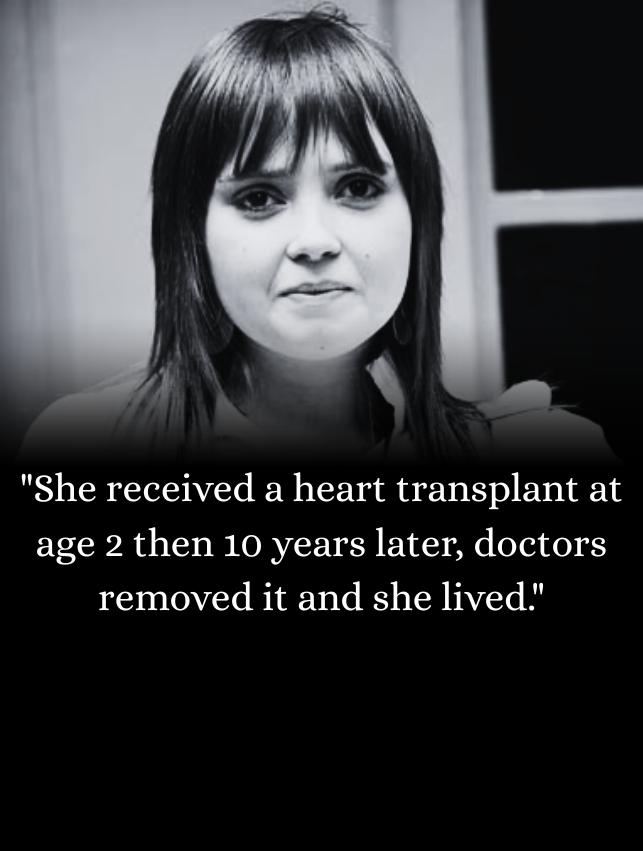
She received a heart transplant at age 2—then 10 years later, doctors removed it and she lived.

Harefield Hospital, London.
Two-year-old Hannah Clark was dying. Her heart, ravaged by cardiomyopathy, was too weak to pump blood through her tiny body.
Without intervention, she had weeks to live.
The obvious solution: a heart transplant. Remove the failing heart, replace it with a healthy donor organ.
But Hannah’s surgical team, led by renowned cardiac surgeon Sir Magdi Yacoub, proposed something almost unheard of:
Leave her dying heart exactly where it was.
Instead of replacing it, they would give her a second heart—placed right alongside the first.
A “piggyback” transplant.
The donor heart, from a one-year-old child, would do all the work of pumping blood. Meanwhile, Hannah’s own failing heart would remain in place, relieved of its burden.
Resting. Given time to possibly heal.
It was a gamble. In 1995, no one knew if a failing heart could truly recover with enough support.
The surgery succeeded.
Hannah left the hospital with two hearts beating in her chest.
For years, doctors monitored every heartbeat. The donor heart kept her alive. Her original heart showed gradual, encouraging signs of improvement.
By age six, both hearts were functioning normally.
The recovery seemed miraculous.
But then came the price.
The immunosuppressant drugs Hannah needed to prevent her body from rejecting the donor heart began causing devastating side effects.
She developed EBV PTLD—a cancer directly linked to immune suppression.
At age eight, the cancer had spread and become life-threatening.
She endured chemotherapy. Multiple rounds of aggressive treatments. The cancer went into remission, then returned. Again and again.
For years, Hannah was trapped: reject the donor heart without the drugs, or face recurring cancer with them.
By 2005—ten years after her original transplant—doctors faced an agonizing situation.
The donor heart was now failing. To fight the cancer, they’d been forced to reduce her immunosuppressant medications. Her body had begun rejecting the very organ that had saved her life.
But an echocardiogram revealed something remarkable:
Hannah’s original heart—the one that had been failing in 1995—had recovered.
After ten years of rest, supported by the donor heart, it had regained its strength.
It was functioning like a normal, healthy heart.
The decision was made.
In February 2006, at Great Ormond Street Hospital, a surgical team led by Dr. Victor Tsang performed a surgery that had never been done before.
They removed the donor heart.
A transplant reversal.
As the donor heart was lifted from her chest, Hannah’s original heart took over completely.
It beat steadily. Pumping blood on its own.
The heart that had been too weak to sustain life at age two was now strong enough to carry her forward.
With the donor heart removed, the immunosuppressant drugs were stopped entirely.
Hannah’s immune system, no longer suppressed, fought off the cancer.
She made a complete recovery.
Hannah Clark became the first person in the world to have a heart transplant successfully reversed.
Today, she lives with the heart she was born with—a heart that failed, was given time to rest, and recovered against all odds.
Her case provided groundbreaking evidence that the human heart, under the right conditions, possesses remarkable regenerative powers.
It revealed that in certain types of cardiomyopathy—particularly in young children—damaged hearts can heal if given adequate support and time.
Her story helped pave the way for modern treatments, including ventricular assist devices that give failing hearts the support they need to potentially recover, without the complications of permanent transplantation.
Hannah’s case stands as proof of something profound:
Sometimes, with the right help, our bodies can heal themselves in ways we never imagined possible.
A two-year-old girl was given a second heart to save her life.
Ten years later, doctors took it away—and discovered her first heart had been quietly healing all along.
Two hearts. Two chances. One extraordinary recovery.
And a medical breakthrough that changed how we understand the human heart’s ability to heal.
Watch video more below 👇👇
Young girl receives heart transplant after 200 day wait
