
She Sang Like the Land Remembered Her Name

By the time the world truly learned her voice, it already carried centuries of sorrow, rebellion, and grace. It was a voice that sounded ancient and urgent all at once—like a lament pulled from Irish soil and hurled into the modern world.
From a fire-scarred childhood in rural Ireland to stadiums filled with millions, the life of Dolores O’Riordan reads less like a traditional rise to fame and more like a lifelong reckoning between extraordinary talent and relentless inner torment.

Dolores Mary Eileen O’Riordan was born on September 6, 1971, in Ballybricken, County Limerick, the youngest of nine children in a deeply devout Roman Catholic family.
Her mother, Eileen, named her after
Our Lady of the Seven Dolours, a title of the Virgin Mary associated with grief and endurance—a name that, in hindsight, feels hauntingly prophetic.
Her father, Terence, worked as a farm laborer until a catastrophic motorcycle accident left him with permanent brain damage, forcing him out of work. With the family’s main provider incapacitated, financial hardship became a constant presence.
Eileen took on long, exhausting hours as a school caterer to keep food on the table. They had little, but by most accounts, the household was filled with love, faith, and resilience.
Music arrived in Dolores’s life not as a hobby, but as instinct. She sang before she could fully speak, her voice ringing out in the family home and at church gatherings.
By the age of five, her school principal would lift her onto a desk so she could sing for older students, already aware that something rare lived in that small child. She learned traditional Irish ballads, absorbed Catholic hymns, and taught herself instruments like the tin whistle and keyboard.
The folklore of the Irish countryside—its myths, saints, and quiet endurance—seeped into her bones and would later echo unmistakably in her music.
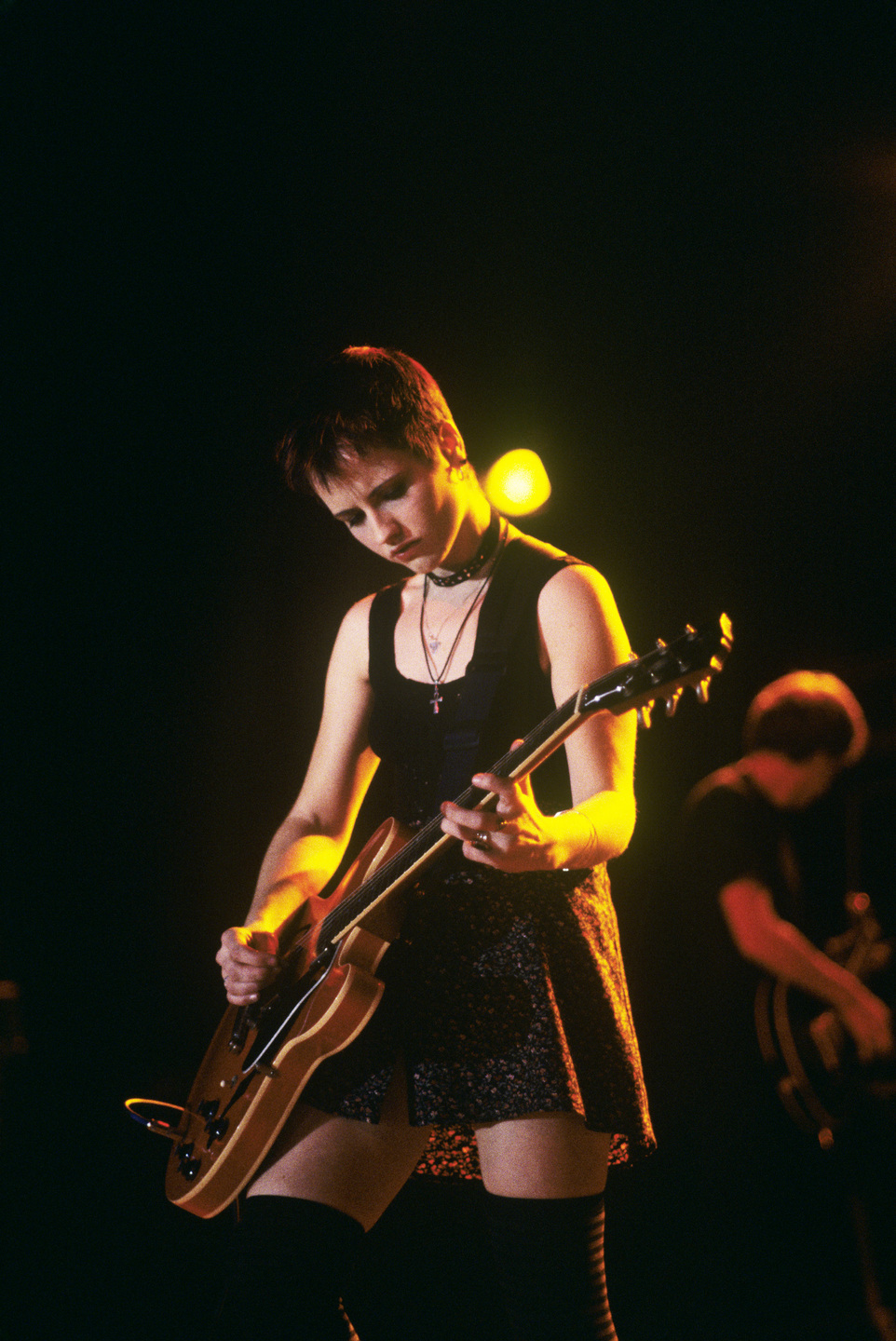
But childhood innocence proved fragile. When Dolores was seven, a house fire destroyed the family home, leaving them dependent on the kindness of neighbors who raised funds to rebuild it.
Even more devastating were the hidden traumas that followed. Years later, O’Riordan would bravely reveal that she had been abused for an extended period by someone she trusted.
The damage was profound and long-lasting, manifesting in adulthood as depression, self-harm, eating disorders, and deep self-loathing. These wounds never fully healed; instead, they became part of the emotional undercurrent of her life and art.
At 18, against her parents’ wishes, Dolores left home to pursue music. She was young, poor, and often hungry, sleeping wherever she could and clinging to the belief that her voice had a purpose.
Fate intervened in 1990 when a local band—then called The Cranberry Saw Us—was searching for a new singer.
When Dolores auditioned, she arrived shy and nervous, clutching lyrics she had written herself. Guitarist Noel Hogan later recalled being stunned: a quiet young woman with a voice that felt both fragile and ferocious, modern yet ancient.
She was immediately invited to join. The band soon shortened its name to The Cranberries, and their sound crystallized around her unmistakable vocals.
Their debut album, Everybody Else Is Doing It, So Why Can’t We?
(1993), introduced the world to songs like “Linger” and “Dreams.” The music was soft, melodic, and emotionally raw—steeped in longing and vulnerability.
Dolores’s lilting Irish accent, once considered a commercial risk, became the band’s defining signature. The album’s success was steady rather than explosive, but it laid the groundwork for what came next.
In 1994, No Need to Argue catapulted The Cranberries to global stardom. At its center was “Zombie,” a ferocious protest song written in response to an IRA bombing that killed two children in England.
With distorted guitars and an anguished vocal delivery, “Zombie” was unlike anything else on the radio at the time. Record executives urged Dolores to soften the song’s message, to make it more palatable.
She refused. She famously turned down lucrative offers rather than dilute her intent. “Zombie” was not merely a hit—it was a moral stand, a declaration that her art would never be separated from her conscience.

Fame, however, came at a brutal cost. By her mid-20s, O’Riordan was one of the highest-paid female rock musicians in Europe, yet she often spoke of feeling hollow and exposed.
The pressures of constant touring, media scrutiny, and public expectation eroded her mental health. Concerts were canceled due to exhaustion. Depression deepened.
Alcohol became a coping mechanism. Later, she would reveal a diagnosis of bipolar disorder and admit to multiple suicide attempts, explaining that her children were the reason she stayed alive.
Marriage and motherhood offered moments of grounding. She married Don Burton, a tour manager for Duran Duran, and together they had three children. The family eventually settled in Canada, far from the glare of the spotlight.
Dolores often described motherhood as her greatest source of healing—a reason to fight her demons—but it did not erase them.

The Cranberries disbanded in 2003, reunited in 2009, and released
Roses in 2012, proving that their creative bond remained intact. Yet Dolores’s personal struggles continued, marked by public breakdowns, legal troubles, and ongoing mental health battles.
On January 15, 2018, Dolores O’Riordan was found unresponsive in a London hotel bathroom. She was 46 years old. A coroner later ruled her death an accidental drowning, with alcohol intoxication as a contributing factor.
The news devastated fans worldwide—not because her pain was unknown, but because her voice had always sounded so enduring, so eternal.

In the end, Dolores O’Riordan left behind more than albums and awards. She left honesty—raw, defiant, and unfiltered. Her voice carried the weight of history and the vulnerability of confession. Long after the final note fades, it continues to speak.
Some artists entertain. Others endure.
Dolores O’Riordan did both—and paid the price for it.
