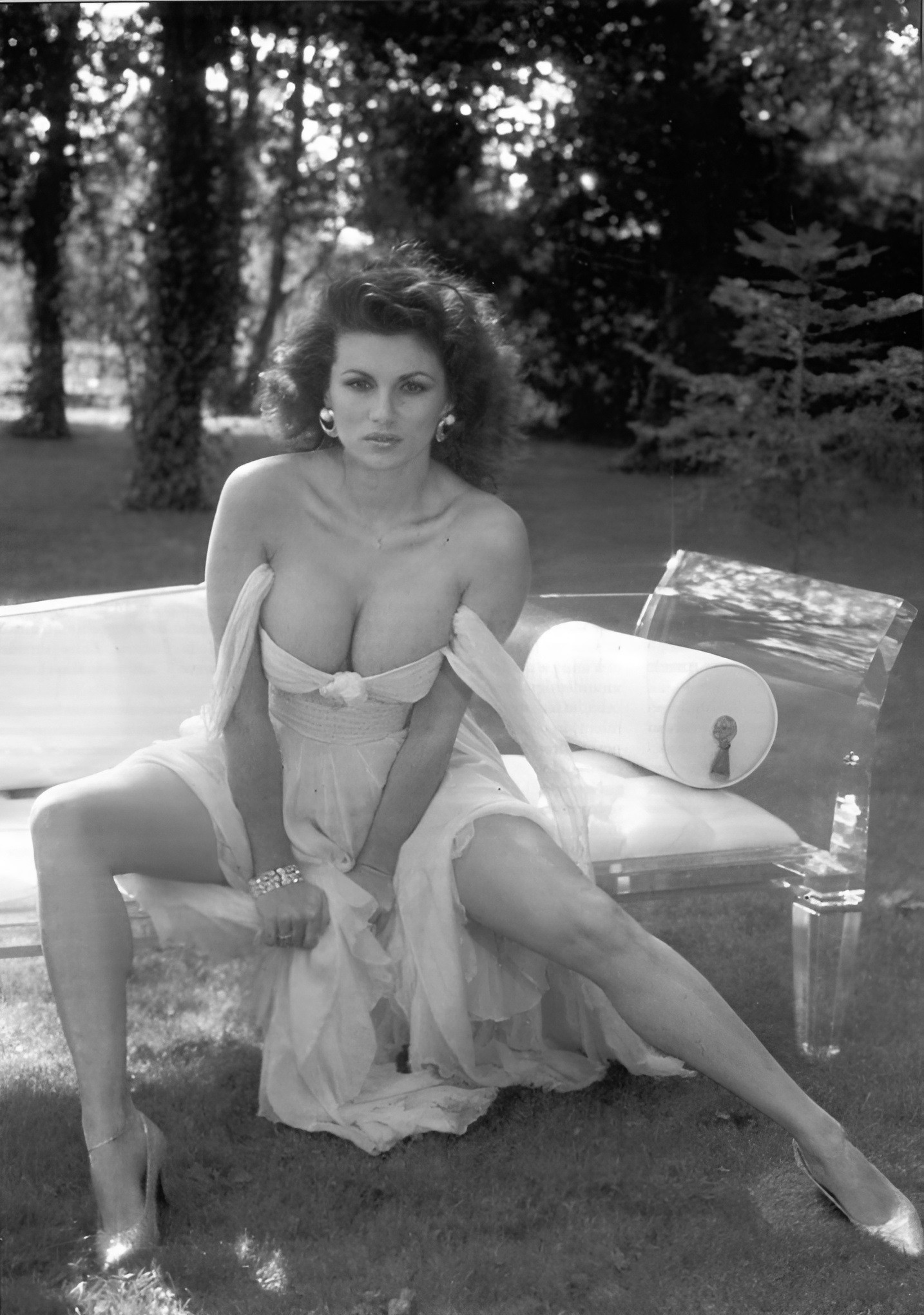
The Actress Who Turned Sensuality into Art and Fame into Power

In the glittering world of Italian cinema during the 1980s—an age marked by sensuality, daring styles, and unapologetic charisma—few figures shone as brightly as Serena Grandi. To audiences, she embodied a kind of effortless allure that seemed uniquely Italian, a presence so captivating that she could dominate a scene even in silence.
Yet behind that glamorous exterior was a young woman from Bologna who worked her way into the limelight through determination, intuition, and a remarkable ability to reinvent herself whenever circumstances changed.Serena Grandi, born Serena Faggioli on March 23, 1958, grew up in Bologna, a city celebrated for its rich history, culinary traditions, and intellectual reputation. Her early years were far removed from the world of film.
She pursued practical paths, first working as a computer programmer and later studying to become a laboratory technician. Nothing in her early trajectory suggested she would one day become one of Italy’s most recognizable actresses. But those who knew her often noticed an unmistakable spark—something in her expressive features, her natural poise, or her quiet confidence that hinted she was destined for a life much larger than the ordinary one she was preparing for.

Her entry into cinema happened almost by coincidence. As the 1970s drew to a close, the Italian film industry was evolving rapidly, searching for new faces who could bring freshness and flair to an increasingly bold cinematic landscape. Directors wanted personalities who could reflect the era’s appetite for sensual storytelling and glamorous escapism. Serena caught their attention immediately.
Even in her earliest appearances—small roles scattered across genre films—she left an impression. These parts were often brief, sometimes nothing more than a flash of beauty or a moment of intrigue, but they fulfilled their purpose. Filmmakers remembered her. Audiences took notice. And Serena began to understand that she had found a path she never expected but was suddenly determined to explore.
Her career gained true momentum in the early 1980s when she began receiving roles that highlighted her striking physicality and natural confidence. Italian cinema of that period leaned heavily into erotic comedies and dramas, and Serena quickly emerged as one of its most sought-after presences. Yet she brought something more than sensuality to the screen: she possessed a sharp instinct for balancing allure with authenticity. She grasped what the audience wanted, but she also knew how to infuse her characters with sincerity, humor, and emotional nuance.
A pivotal turning point came with director Tinto Brass, a prominent figure in the realm of Italian erotica. Brass had a gift for discovering actresses who could embody both sensuality and personality, and he recognized in Serena a combination that was rare—innocence intertwined with intensity, charm paired with emotional weight. Their collaboration culminated in the 1985 film “Miranda,” which became a defining moment in her career.
Playing a confident, playful tavern owner navigating life and love in the Po Valley, she delivered a performance that transcended the expectations of the genre. What could have been a purely provocative role instead became a character study filled with warmth and complexity. The film achieved iconic status, and Serena Grandi emerged as a central figure in Italian pop culture.
But she refused to be confined to a single cinematic category. As her fame grew, she expanded her range, taking on roles in thrillers, horror films, and mainstream comedies. One standout moment was her appearance in the cult horror film “Deliria” (often known internationally as “StageFright”). In this project, she demonstrated a different side of her talent—fear, vulnerability, and tension—proving she could carry stories beyond the erotic or glamorous.
Audiences and critics alike began to acknowledge her versatility and her ability to elevate material through sheer presence and emotional intelligence.By the late 1980s and early 1990s, Serena Grandi had become one of Italy’s most widely recognized women. She graced magazine covers, appeared on television, and starred in films that further cemented her star status. She came to represent the spirit of Italian femininity during that era: vibrant, bold, mischievous, and unforgettable.

Yet she remained grounded, described by those close to her as loyal, kind-hearted, and unwaveringly protective of her loved ones. A significant shift occurred in the 1990s when she embraced motherhood. With the birth of her son Edoardo, she chose to step back from the high-paced world of cinema and focus on raising him. She often described this period as the most meaningful chapter of her life, more fulfilling than awards or public admiration.
Time brought challenges as well. Serena faced periods of legal trouble and the inevitable fluctuations in public attention that come with a long career. But she met each hardship with resilience, the same strength that had propelled her from the ordinary to the extraordinary in the first place. Eventually, she returned to television and film, showing that true charisma does not disappear—it evolves. Today, Serena Grandi continues to be a cherished figure in Italian culture.
Admired not only for her unforgettable beauty but also for her sincerity, honesty, and staying power, she remains a symbol of an era that she helped define. Her life story is one of reinvention, perseverance, and the courage to remain true to oneself even when fame tries to shape you into something else. Serena Grandi did not merely participate in the cinematic landscape of the 1980s. She left her mark on it, shaping its identity and becoming one of the faces that audiences still remember with admiration and affection.
