A senior boy slapped a quiet girl in the school library in front of everyone… But the substitute librarian who let go of her book cart mid-push had spent eleven years as a Marine Corps Drill Instructor.
The Millbrook High library was the kind of place where nothing ever happened.
Fluorescent lights. Rows of shelves. The faint smell of old paper and carpet cleaner. Six or seven students scattered at tables on a Tuesday afternoon, heads down, earbuds in, doing what students do in libraries — mostly nothing that counted as studying.
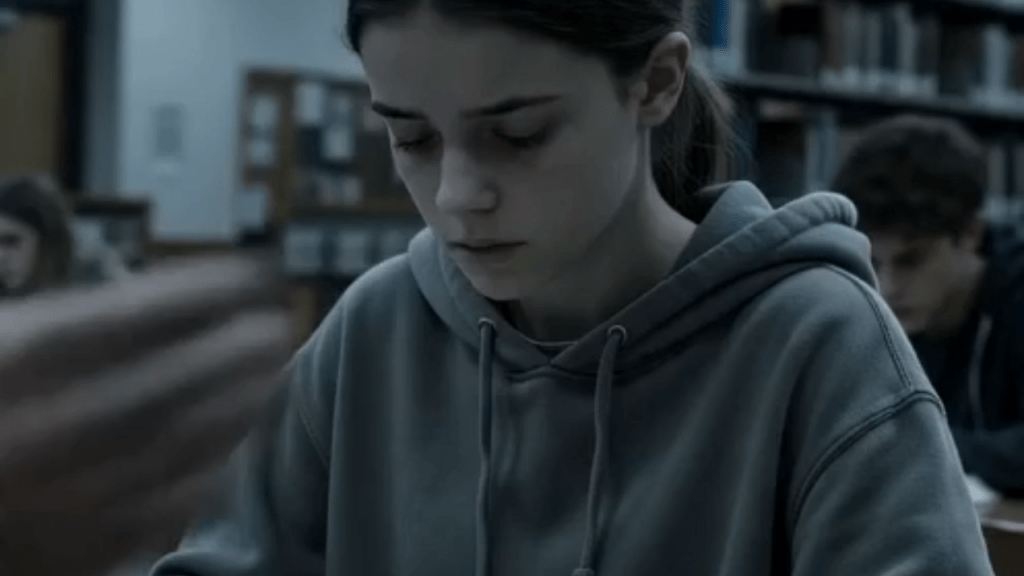
Maya sat alone at the far table near the reference section.
She was sixteen, slight, the kind of girl who carried three different highlighters and actually used them. Her notebook was open. Her head was down. She wasn’t bothering anyone.
She never bothered anyone.
The substitute librarian had arrived that morning without ceremony.
Mrs. Patterson was out sick. The office had sent a replacement — a woman in her early fifties, plain khaki slacks, a gray cardigan, reading glasses on a cord around her neck. She’d signed in at the front desk, found the book cart, and gotten to work without asking where anything was.
Her name tag said: HALE, S. — SUBSTITUTE.
Nobody read it.



She moved through the shelves the way people move when they’ve spent years learning to be efficient — no wasted steps, no hesitation, just a quiet, methodical push of the cart down each aisle. Students glanced up when she passed. She didn’t make conversation. She shelved books.
She was halfway down the biography aisle when she heard it.
Tyler Marsh was a senior. Varsity lacrosse. The kind of seventeen-year-old who had learned, over four years, that certain spaces in a school belonged to him by default.
He’d dropped into the chair across from Maya twenty minutes earlier, uninvited.
“You still haven’t texted me back,” he said, low enough that only she could hear.
Maya didn’t look up. “I don’t want to.”
“That’s kind of rude.”
“Tyler.” She kept her eyes on her notebook. “Please leave me alone.”
He leaned forward, elbows on the table. “I just want to talk.”
“I don’t.”
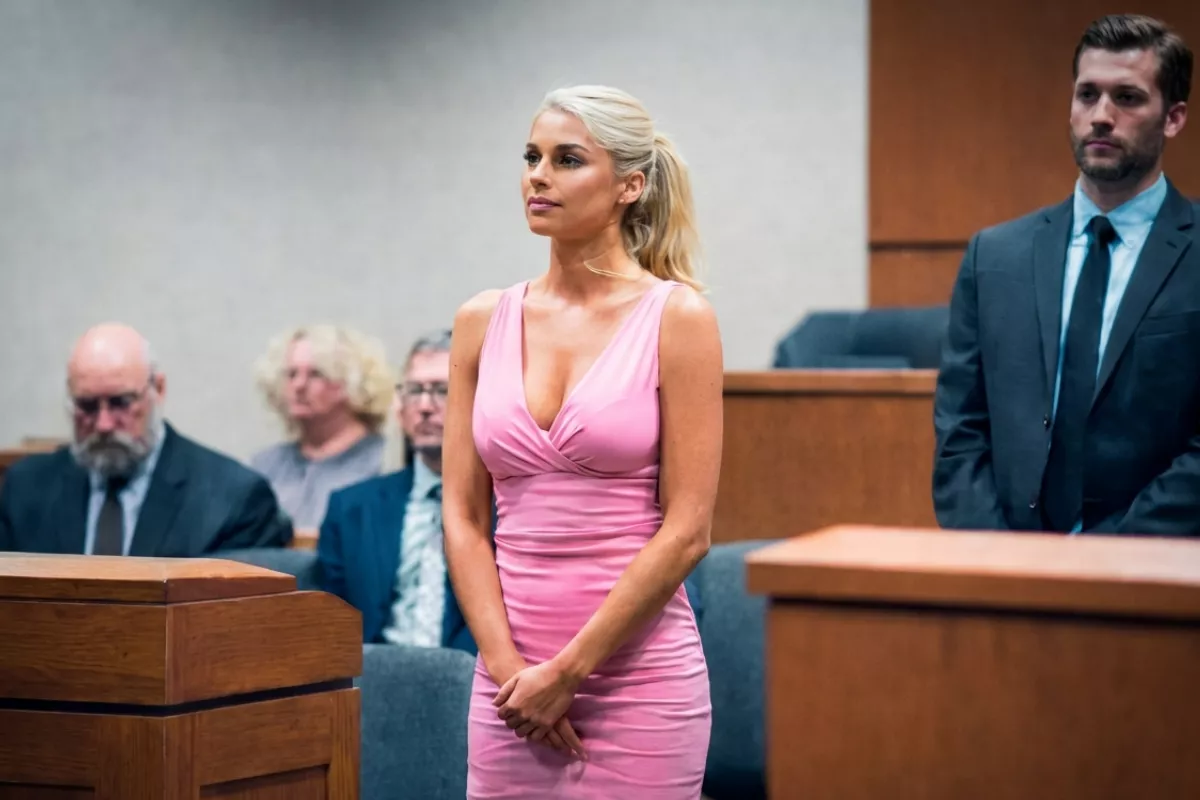

Something shifted in his face. The easy confidence curdled into something uglier. He reached over and flicked her pen off the table. She watched it hit the floor and didn’t move.
“Pick it up,” he said.
“No.”

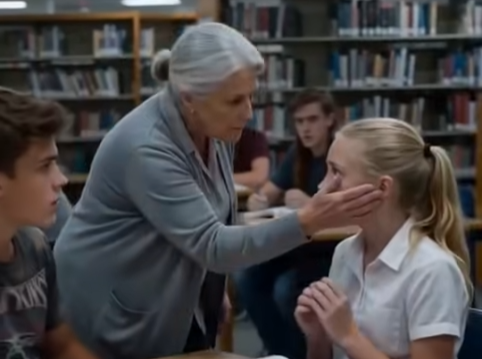
He stood up. Came around to her side of the table. She turned in her chair to face him, and that was when he did it — an open-palm slap, hard, across her left cheek.
The sound cracked through the library like a ruler hitting a desk.
Maya’s books slid off the table. She grabbed the edge with both hands, her head turned from the impact, her right hand coming up to her face. Two students at the nearest table stood up. One of them said, “Oh my God.”
Nobody moved toward Tyler.
Nobody moved toward Maya.
The book cart, three aisles away, stopped rolling.
The substitute librarian let go of the handle.
The cart rolled two feet on its own momentum, slowed, and stopped in the middle of the aisle.
She didn’t look back at it.
She walked toward the sound — not fast, not running, not the way someone rushes toward an emergency. The pace was something else entirely. Measured. Deliberate. The specific economy of motion that belongs to people who have spent years learning that panic wastes time and stillness communicates more than volume ever will.
Students between her and the table moved without being told.
They didn’t know why they moved. They just did.
She reached Maya first.
She crouched slightly, looked at the girl’s face — both sides, quick, thorough — the practiced check of someone who has assessed injuries in conditions that had nothing to do with a school library. Maya’s cheek was red. Her eyes were wet but her jaw was set.
“You okay?” the substitute asked, quietly.
Maya nodded once, tight.
The substitute straightened. She turned to Tyler.
She didn’t raise her voice. She didn’t point. She didn’t do any of the things adults do when they want to seem in control of a situation they’re actually frightened by.
She just stood there, completely still, and said: “Pick up her books.”
Tyler blinked. “Excuse me—”
“Her books.” Same tone. Same volume. “They’re on the floor.”
He looked around the library — at the students watching, at the sub, at Maya — and something in the sub’s stillness made the calculation very simple. There was no anger on her face. No outrage. No performance. Just a complete, unhurried certainty that what she’d said was going to happen.
He bent down.
He picked up the first book. Set it on the table.
Picked up the second. Set it down.
Picked up the notebook, the pen, the highlighter that had rolled under the chair. Set them down, one at a time, in a neat stack.
Nobody said anything.
The sub watched him the entire time, hands loose at her sides, weight balanced, standing the way people stand when they have absolutely nowhere else they need to be.
When he finished, he straightened up and opened his mouth.
“Don’t,” she said.
He closed it.
“Apologize to her.”
A beat. Then: “I’m sorry, Maya.”
Maya looked at him. “Okay.”
The sub nodded once. “Now go to the main office. Tell them you need to speak with the principal.” She paused. “Tell them Gunnery Sergeant Hale sent you.”
Tyler stared at her.
“That’s not a request,” she said. Same flat, carrying voice. “That’s a direction.”
He left. The library door swung shut behind him.
The room stayed quiet for a moment.
One of the students at the back table — a junior named Dani who had been frozen with her hands over her mouth for the last ninety seconds — finally exhaled. “What just happened?”
Nobody answered her.
The substitute pulled a chair out from the table and sat down across from Maya. Not hovering. Not dramatic. Just present.
“You want some water?” she asked.
“I’m okay,” Maya said. Her voice was steady, but her hands weren’t.
“You don’t have to be okay right now.” The sub said it matter-of-factly, the way you’d tell someone it’s going to rain. “That was a hard thing that just happened to you.”
Maya looked at her. “He’s going to say I provoked him.”
“He might.”
“Nobody’s going to believe me.”
“I watched the whole thing,” the sub said. “And I’m going to write down exactly what I saw, in exactly the order it happened, and sign my name to it.” She paused. “My name carries some weight in certain rooms. The principal’s office is one of them.”
Maya was quiet for a moment. “Who are you?”
The sub glanced at her name tag, then back at Maya. “Someone who spent eleven years making sure young people understood that there are consequences for their choices.” A brief pause. “He’s going to understand that today.”
In the principal’s office, Tyler sat across from Dr. Renner and tried the version of events where Maya had been difficult and he’d just reacted.
Dr. Renner listened. Then she set a handwritten statement on the desk between them.
It was two pages. Precise. Timestamped. It described, in clear sequential detail, every action Tyler had taken from the moment he sat down across from Maya — the flicked pen, the escalating pressure, the slap, the books on the floor — and every action that followed.
At the bottom, in firm block letters: SGT. S. HALE, USMC (RET.)
Tyler read it. His face went pale.
“She wrote down the pen,” he said. “She wasn’t even there yet.”
“She was in the next aisle,” Dr. Renner said. “She heard everything.” She folded her hands. “Tyler, I’m going to call your parents now. And I’m going to recommend a ten-day suspension and a mandatory review with the district’s conduct board. That process will include this statement.”
“It was one—”
“It was an assault,” Dr. Renner said. Not unkindly. Just clearly. “In a school. In front of witnesses. Documented by a retired Gunnery Sergeant who, I’ll note, also called the district’s Title IX coordinator from her cell phone approximately four minutes ago.”
Tyler said nothing.
“Your parents are going to have a lot of questions,” she said. “I’d suggest you think carefully about how you answer them.”
Back in the library, the substitute had returned to her cart.
It was exactly where it had stopped — two feet past where she’d let go of it, in the middle of the biography aisle, right between H and J.
She picked up the handle. Checked the next book on the shelf. Found its place. Slid it in.
Dani, who had followed her at a cautious distance, stopped at the end of the aisle.
“Ms. Hale?”
The sub looked up.
“That was—” Dani paused. “I don’t know what that was. But thank you.”
“She didn’t need me to rescue her,” the sub said. “She needed someone to make sure the room understood what was actually happening.” She pulled the next book from the cart. “There’s a difference.”
Dani nodded slowly. “How did you get him to just… do it? Pick up the books? He’s Tyler Marsh. He doesn’t—”
“He does now,” the sub said simply.
She shelved the book. Moved the cart forward.
Maya stayed at her table for another hour.
She opened her notebook. Uncapped her highlighter. Tried to focus on the page.
At some point she looked up and watched the substitute work her way methodically through the last aisle — quiet, unhurried, sliding each book into its place with the same calm efficiency she’d brought to every other part of the afternoon.
The cart that had rolled on its own. The walk that hadn’t been a rush. The two words that had ended it.
*Pick up her books.*
Maya looked back down at her notebook.
For the first time since the slap, her hands were steady.
Tyler Marsh served the full ten-day suspension.
The conduct board review resulted in a formal disciplinary record that followed him to his college applications. Two schools rescinded early acceptance offers after the district’s required disclosure. A third accepted him on academic scholarship — and revoked the scholarship when his mother, in a phone call she thought was private, confirmed the incident to a board member who happened to be Dr. Renner’s former colleague.
He graduated. Barely. Without the fanfare he’d expected.
Maya graduated two years later, valedictorian, full scholarship to a university three states away. In her speech, she talked about the difference between the people who watch something happen and the people who decide, quietly and without drama, that it isn’t going to continue.
She didn’t name anyone.
She didn’t have to.
The substitute came back twice more that semester when Mrs. Patterson was out sick.
She shelved books. She kept the cart moving. She never mentioned the Tuesday in October to anyone.
On her last day, she signed out at the front desk. The secretary glanced at the name tag out of habit.
“Hale,” she said. “Any relation to the Hale that Tyler Marsh’s family keeps mentioning in their appeal?”
The substitute tucked her pen into her cardigan pocket. “I wrote a statement,” she said. “It was accurate.”
She picked up her bag.
“Have a good afternoon,” she said, and walked out.
The door closed behind her.
The cart she’d left by the front desk sat perfectly still.