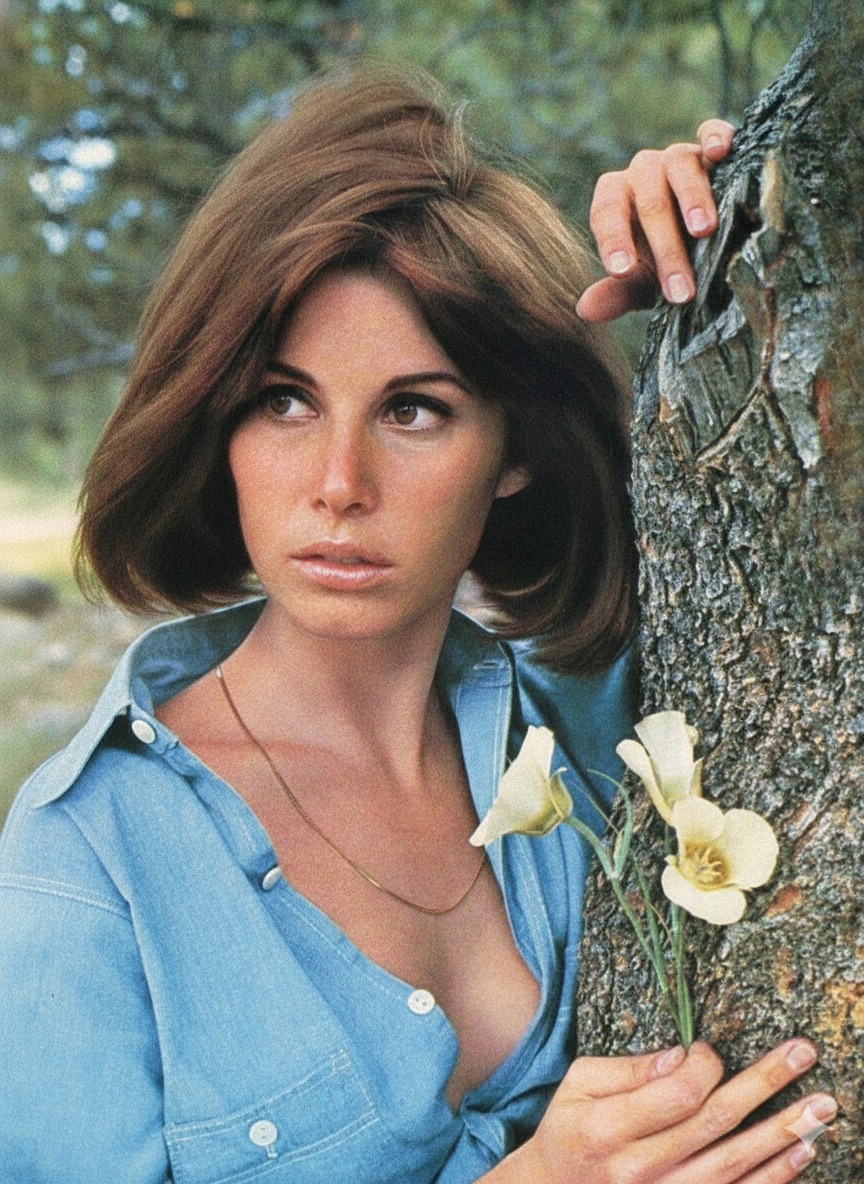
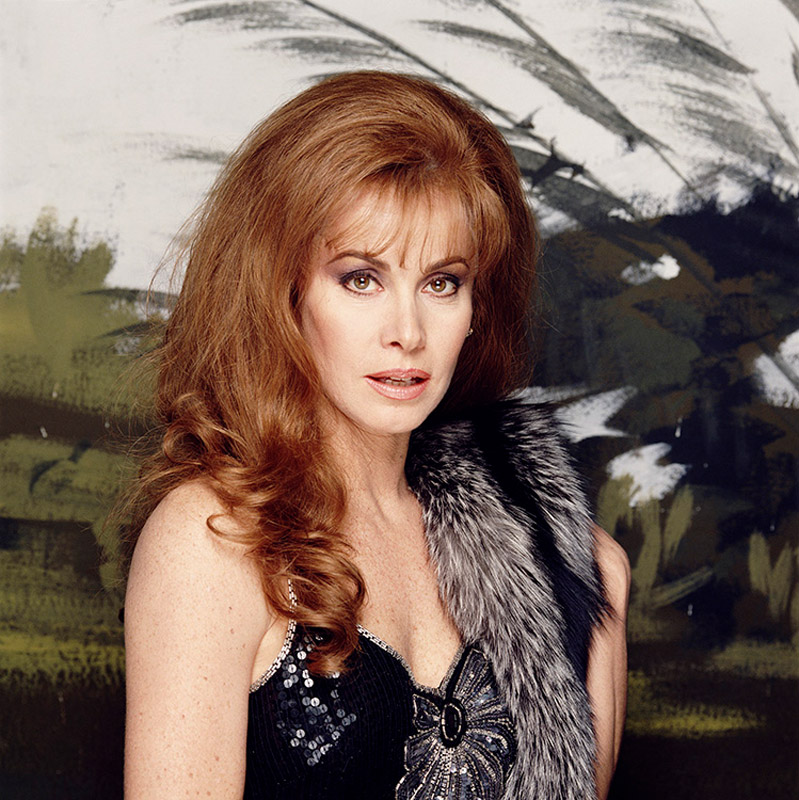
Who is the Hollywood-born star seen here in 1969 who first played April Dancer in a spy spin-off, then charmed prime time as one half of a jet-set sleuthing duo

Stefanie Powers was born in Hollywood, California, in 1942, and seemed destined for the screen. With striking red hair, sharp wit, and undeniable presence, she embodied the glamour and spirit of a changing era.
Over the course of her long career, she became one of television’s most recognizable faces, while offscreen she discovered a deeper calling—one that would take her far from the studios of Los Angeles to the vast, untamed plains of Kenya.
Her beginnings were quintessentially Hollywood. Signed by Columbia Pictures as a teenager, Powers trained under the traditional studio system, appearing in minor roles before breaking into feature films in the early 1960s.
She worked steadily in movies such as Experiment in Terror (1962), McLintock! (1963), and The New Interns (1964), building a reputation for intelligence, elegance, and energy.
At a time when young actresses were often typecast as sweet or simple, Powers brought something fresh—a mix of refinement and vitality that would later define her most iconic roles.
Her first major television success came in 1966 with The Girl from U.N.C.L.E., a spin-off of the hit spy series The Man from U.N.C.L.E.. As April Dancer, one of television’s first female secret agents, she broke ground as a woman who could be stylish, witty, and capable all at once.
The show may have lasted only one season, but it established Powers as a modern heroine—one who could balance action with humor and sophistication. It was an era when espionage stories captivated audiences, and Powers held her own alongside the likes of James Bond and Emma Peel.

Through the 1970s, Powers became a familiar face across American television, guest-starring in countless popular series and made-for-TV movies. But her true breakthrough came in 1979, when she was cast opposite Robert Wagner in
Hart to Hart.
The show followed Jonathan and Jennifer Hart, a glamorous married couple with a penchant for solving crimes amid champagne, sports cars, and couture fashion. Powers’ portrayal of Jennifer—elegant yet down-to-earth, charming yet razor-sharp—won her widespread admiration.
The chemistry between her and Wagner was undeniable, and their onscreen partnership became one of television’s most beloved pairings.
Hart to Hart ran for five successful seasons and earned Powers multiple Emmy and Golden Globe nominations. More importantly, it captured the essence of 1980s luxury and adventure—at a time when television audiences longed for stories that combined romance and escapism.
Even decades later, the series remains a cult favorite, celebrated for its wit, style, and the timeless partnership at its core.

Yet while her fame soared, another part of Powers’ life was quietly transforming. In the 1970s, she met actor
William Holden, a Hollywood legend nearly two decades her senior.
Their relationship would become one of the most defining chapters of her life—not just for its romance, but for its impact on her sense of purpose. Holden, known for his roles in
Sunset Boulevard and Stalag 17, was also a passionate conservationist deeply involved with wildlife preservation in Kenya.
Powers joined him on his trips to Africa, and the experience changed her forever.
When Holden died suddenly in 1981, Powers was devastated. But rather than retreat from that part of their shared life, she made a promise to continue his work.
Two years later, she co-founded the
William Holden Wildlife Foundation, an organization dedicated to conservation education and the protection of endangered species.
Through her leadership, the foundation built schools, research facilities, and community programs in Kenya, empowering young people to learn about and protect their natural environment.

Her work has since been recognized around the world. Powers became a global advocate for conservation, speaking before international organizations, collaborating with scientists and educators, and serving as a board member for wildlife protection groups.
She has received numerous humanitarian awards for her efforts, including honors from the African Wildlife Foundation and the Smithsonian Institution. Her dedication is not symbolic—it is hands-on, personal, and deeply informed by decades of involvement.
Even as her humanitarian work took precedence, Powers never fully left acting behind. She continued to appear in television movies and stage productions, often choosing roles that reflected emotional depth and resilience.
ln the 1990s and 2000s, she reprised her role as Jennifer Hart in several Hart to Hart reunion films, delighting longtime fans. She also found acclaim in the theater, particularly for her performance as Tallulah Bankhead in
Looped and in a stage adaptation of Sunset Boulevard.

Her career, like her life, reflects a rare balance between glamour and substance. Whether portraying a jet-setting sleuth or working in Kenya to save wildlife, Powers has always approached her work with authenticity and commitment.
She often speaks about how her time in Africa taught her patience, humility, and the interconnectedness of all living things.
Now in her 80s, Stefanie Powers remains as radiant as ever—graceful, articulate, and endlessly curious. She divides her time between Los Angeles and Kenya, continuing to oversee the foundation that bears William Holden’s name.
To this day, she credits him not only for their shared love story but for awakening in her a sense of purpose beyond fame.
“I was given a gift,” she once said. “The chance to take something beautiful that began as love and turn it into something lasting—something that helps others.”
Her journey from Hollywood to the African plains stands as one of the most inspiring transformations in the entertainment world. She began as a bright young actress under contract, dazzled audiences as a leading lady, and emerged as a lifelong advocate for nature and compassion.
Stefanie Powers is not just remembered for the characters she brought to life, but for the life she built beyond the camera—a life filled with meaning, courage, and devotion.
From the bright lights of Los Angeles to the golden grasslands of Kenya, her story proves that the greatest roles are not always written for the screen, but lived with purpose.
She Disappeared for Months — Then One Photo Set the Internet on Fire
Hollywood icon Meg Ryan, known for her roles in beloved romantic comedies like When Harry Met Sally and Sleepless in Seattle, recently made a rare public appearance that has reignited public interest and sparked heated discussions online.
The 61-year-old actress stepped out to support her longtime friend Michael J. Fox at a screening of his upcoming documentary, STILL: A Michael J. Fox Movie, in New York City.
This marked her first public outing in six months, as Ryan has deliberately maintained a low profile in recent years.
However, her appearance quickly became the focal point of social media chatter. Fans were taken aback by her strikingly smooth complexion, with some describing her look as “unrecognizable.”
The photos, which captured Ryan smiling alongside Fox and mingling with other celebrities like Bill Murray and Elvis Costello, went viral. Yet, while some fans praised her radiant presence, others harshly speculated about possible cosmetic procedures.
Online Reactions and Debate
The online debate was swift and intense. Critics flooded social media platforms with comments questioning her altered appearance. “This is Meg Ryan? Hopefully, women will learn from this. Plastic surgery is for Frankenstein,” one Twitter user wrote.
Another remarked, “Meg Ryan spent thousands to make herself unrecognizable and hideous.” Others expressed concern about the pressures Hollywood places on aging actresses, noting how societal expectations often drive stars to undergo cosmetic enhancements.

Despite the critical comments, many fans defended Ryan, praising her bravery for stepping back into the limelight. “She looks happy and healthy, and that’s all that matters,” one fan posted. Others argued that Ryan’s personal choices about her appearance are hers alone and shouldn’t be subjected to public scrutiny.
Meg Ryan’s Stance on Beauty and Criticism
Ryan has addressed rumors of cosmetic surgery in the past. In a 2015 interview with Porter Magazine, she discussed her approach to beauty and the public’s obsession with her appearance.
“I don’t pay a lot of attention, frankly,” she stated. “There’s a lot of hatred in the world today. It’s so easy to judge. Imagine being a hater, how stupid.”

Her comments reflect the harsh reality faced by many female celebrities who age under the unrelenting gaze of public and media scrutiny.
In an industry notorious for its obsession with youth and beauty, actresses often find themselves in a no-win situation: criticized for aging naturally or condemned for attempting to defy time through cosmetic enhancements.
Supporting Michael J. Fox
Amid the buzz about her appearance, it’s important not to overlook the reason behind Ryan’s public outing. She attended the screening to show support for Michael J. Fox, her longtime friend and fellow actor.
Fox’s documentary, STILL: A Michael J. Fox Movie, chronicles his ongoing battle with Parkinson’s disease, which he was diagnosed with at just 29 years old.

Fox has been candid about his health challenges, recently revealing that his condition has worsened, affecting his mobility and leading to several injuries from falls. In an emotional interview, he admitted, “I’m not gonna lie. It’s gettin’ hard, it’s gettin’ harder. It’s gettin’ tougher… I’m not gonna be 80.”
Ryan’s decision to support Fox during this significant moment in his life speaks to the deep friendship they share. Their bond dates back to the 1980s, when they were both rising stars in Hollywood.
A Hollywood Star Who Chose Privacy
Ryan’s public appearance is noteworthy not only for the debate it sparked but also because it marks a rare moment for an actress who has consciously withdrawn from Hollywood’s spotlight.
Known as the “Queen of Rom-Coms” in the 1990s, Ryan became one of the most bankable stars of her generation, charming audiences with her relatable and effervescent portrayals of love-struck heroines.

However, the pressures of fame and intense media scrutiny eventually led her to step back from acting. In recent years, she has focused on directing and spending time with her children. Despite her reduced public presence, Ryan remains a beloved figure in pop culture, with her movies continuing to resonate with audiences around the world.
The Double Standard of Aging in Hollywood
The reaction to Meg Ryan’s appearance highlights the double standard of aging in Hollywood. While male actors are often praised for growing older gracefully, female stars are scrutinized for every wrinkle or change in their appearance.
This harsh reality pressures many actresses to pursue cosmetic enhancements to maintain their careers.

Ryan’s experience isn’t unique. Actresses like Renée Zellweger, Demi Moore, and Nicole Kidman have all faced similar scrutiny. Yet, male contemporaries rarely face the same level of judgment, underscoring a cultural bias that equates female value with youth and beauty.
Moving Beyond the Surface
While the discourse surrounding Ryan’s appearance reflects society’s obsession with youth and beauty, her presence at Michael J. Fox’s event serves as a reminder of the power of friendship and support.
As she continues to navigate her journey away from Hollywood’s spotlight, perhaps the focus should shift from her appearance to her enduring legacy as one of the most iconic actresses of her generation.
Meg Ryan’s public re-emergence, regardless of the online debate, underscores her influence and impact. Whether she chooses to embrace her age naturally or enhance her look, the decision is hers alone.
As fans and critics alike dissect her latest appearance, it’s worth remembering that behind the headlines and social media posts is a woman who defined an era of romantic comedies and whose legacy is far more than skin deep.