A Story of Fame, Family, and Fortitude in Hollywood

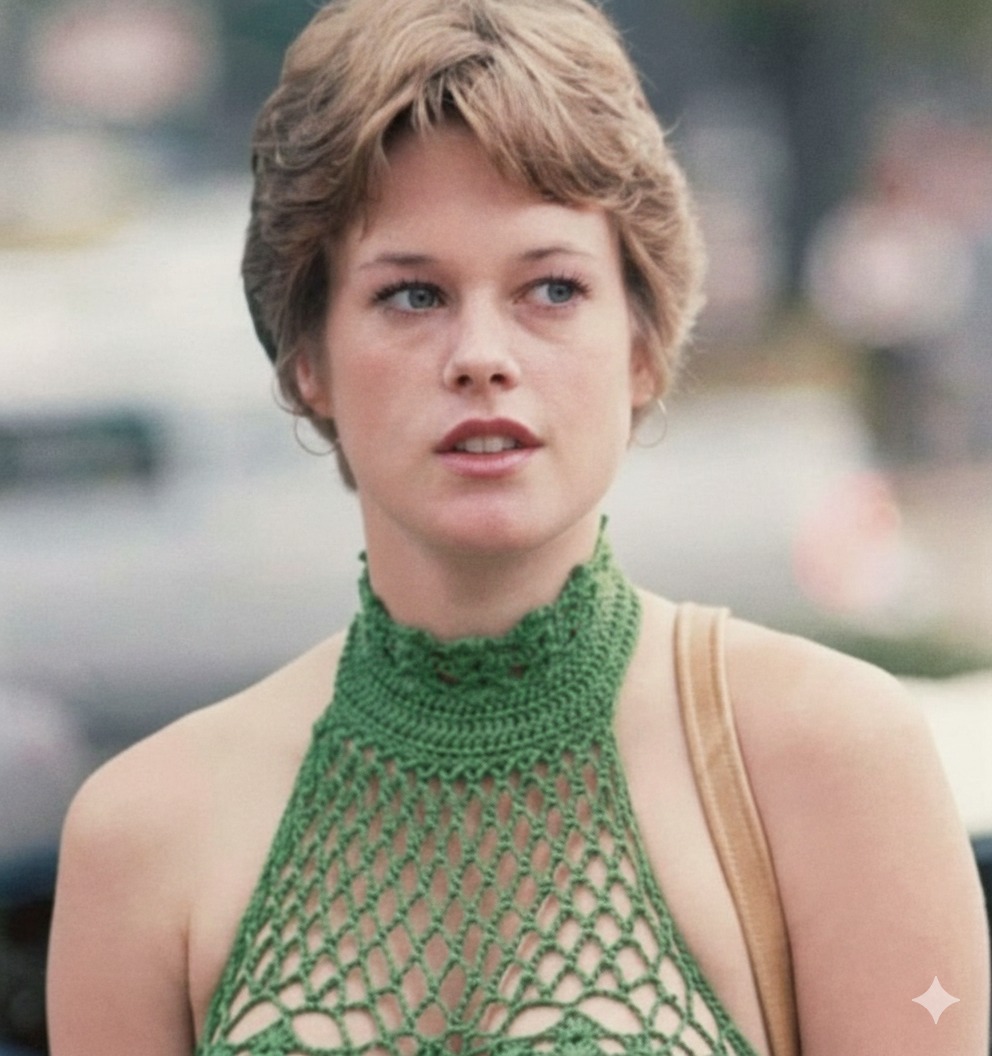
Melanie Griffith, one of the most recognizable actresses to emerge from Hollywood in the 1980s, remains a compelling figure decades after her rise to fame.
Known for her luminous beauty, distinctive voice, and fearless performances, Griffith’s life and career reflect both the magic and the cost of growing up under Hollywood’s bright lights.
Born into a legendary film family, she seemed destined for stardom, yet her journey would be anything but simple.
Griffith was born on August 9, 1957, in New York City to actress Tippi Hedren, immortalized for her work with Alfred Hitchcock in
The Birds, and advertising executive Peter Griffith.
From an early age, Melanie was immersed in a world where cameras, scripts, and celebrity were normal parts of daily life. Yet her childhood was far from ordinary. Her mother famously lived on a wildlife sanctuary in California that housed exotic animals, including lions and tigers.
Growing up alongside such powerful creatures gave Griffith a unique upbringing—one marked by both wonder and danger.
This unconventional childhood helped shape her resilience and adventurous spirit. While other children played in schoolyards, Griffith was exposed to the unpredictability of both Hollywood and nature.
These early experiences instilled in her a toughness that would later help her navigate the pressures of fame, public scrutiny, and personal struggle.

Griffith entered the entertainment industry at a young age, appearing in small roles during her teenage years. Her early performances hinted at a natural screen presence—sensual yet vulnerable, confident yet approachable.
However, it wasn’t until the mid-1980s that her career truly ignited. In 1984, she delivered a striking performance in Brian De Palma’s Body Double, a role that drew attention for its boldness and emotional complexity.
The film firmly established her as a serious actress unafraid to take risks.
Her defining moment came in 1988 with Working Girl.
In the film, Griffith portrayed Tess McGill, an ambitious secretary from Staten Island determined to rise above her circumstances in the male-dominated corporate world.
The role struck a chord with audiences worldwide, especially women who saw their own struggles reflected in Tess’s determination and grit. Griffith’s performance earned her an Academy Award nomination for Best Actress and solidified her place as a leading woman in Hollywood.
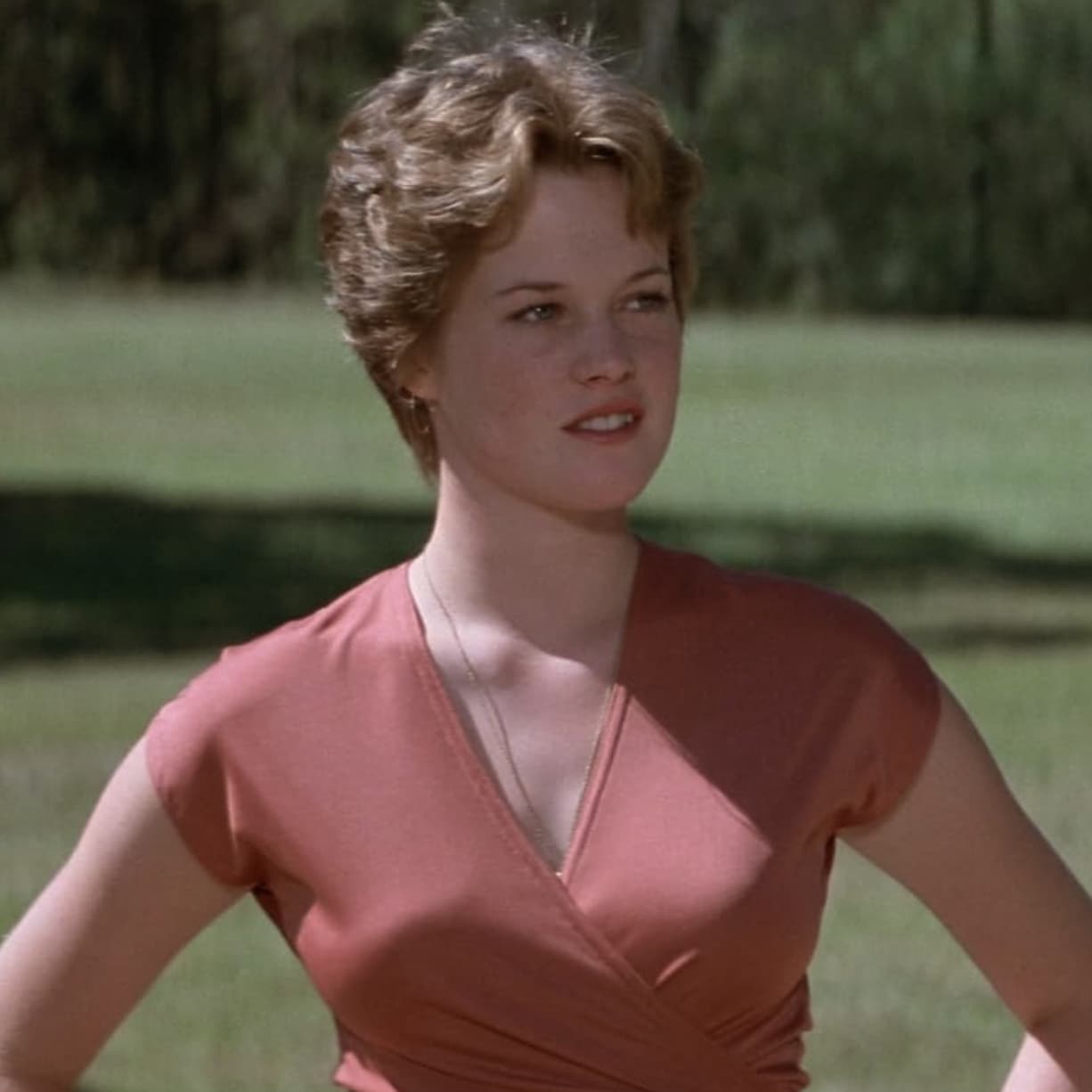
What made Tess McGill so memorable was Griffith’s ability to blend vulnerability with strength. She brought warmth, humor, and authenticity to the character, making her relatable rather than idealized.
It was a performance that captured the spirit of an era while remaining timeless in its message about ambition and self-belief.
While her professional life flourished, Griffith’s personal life often unfolded in the public eye. Her long and complicated relationship with actor Don Johnson began when she was still a teenager.
Their romance, marked by breakups and reunions, eventually led to marriage and the birth of their daughter, Dakota Johnson, who would later become a successful actress in her own right.
Despite their eventual separation, Griffith and Johnson maintained a bond rooted in shared history and mutual respect.

Griffith later married Spanish actor Antonio Banderas in 1996, forming one of Hollywood’s most admired couples of the 1990s. Together, they represented glamour, passion, and international appeal.
They welcomed a daughter, Stella, and often spoke publicly about their love and support for one another. Although the marriage ended in divorce in 2015, both Griffith and Banderas have consistently emphasized their enduring friendship and commitment to co-parenting.
Behind the scenes, Griffith faced significant challenges. Her struggles with substance abuse became widely known, drawing intense media attention. Rather than hiding from her difficulties, Griffith chose honesty.
She sought treatment multiple times and spoke openly about her journey to recovery.
Her willingness to confront her struggles publicly helped reduce stigma and encouraged others to seek help, making her an unintentional advocate for mental health and addiction recovery.

In later years, Griffith faced additional health challenges, including a battle with skin cancer. She underwent multiple surgeries and used her experience to raise awareness about the importance of sun protection and regular health screenings.
Once again, she approached adversity with transparency and courage, reinforcing her reputation as a woman unafraid to face life’s realities head-on.
Today, while Griffith appears less frequently on screen, her presence remains influential.
She continues to attend public events, support charitable causes, and advocate for animal welfare—an interest deeply rooted in her childhood.
Family remains central to her life, and she shares close relationships with her daughters.
Both Dakota and Stella have spoken warmly about their mother, praising her strength, humor, and resilience.

Melanie Griffith’s legacy is not defined by a single role or era but by her ability to evolve. She has experienced extraordinary success, public scrutiny, personal setbacks, and renewal—often under the watchful eye of the world.
Through it all, she has maintained a sense of authenticity that resonates with fans across generations.
Her story reflects the complexities of fame and the resilience required to endure it. More than a symbol of 1980s Hollywood glamour, Melanie Griffith stands as a testament to growth, survival, and grace.
As her life continues to unfold, she remains an enduring figure whose journey offers inspiration, honesty, and a reminder that reinvention is always possible.

What do these quiet 1957 photos reveal? Uncategorized(1)
By 1957, Marilyn Monroe was no longer simply a Hollywood actress—she had become an international symbol, a woman whose face was instantly recognizable from New York to Tokyo.
Magazine covers clamored for her likeness, and every appearance she made sent photographers scrambling. She was, in every sense, a phenomenon: the epitome of glamour, sensuality, and Hollywood allure.
Yet behind the dazzling smile and iconic image, Monroe was entering a period of profound change. The photographs taken of her in that year capture something more than stardom.
They capture a woman in the midst of transformation, trying to reconcile the image the world demanded with the person she longed to become.
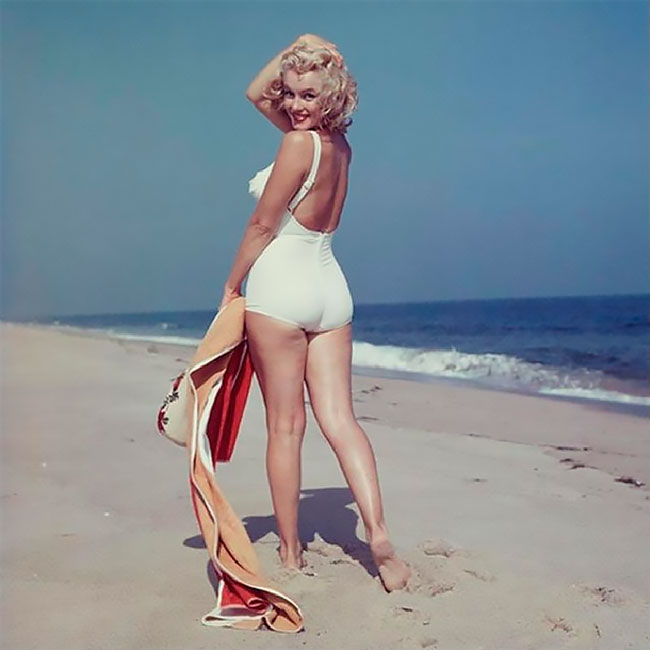
The pictures from 1957 are striking precisely because of their intimacy. In them, Monroe is not the glittering movie goddess performing for the camera, but rather a woman at rest, a woman in thought.
There is an absence of artifice: no carefully staged poses, no exaggerated expressions. Instead, we see her sitting quietly, staring into the distance, or walking with a subdued air. In place of the radiant energy that defined her early career, there is contemplation, even melancholy.
But along with vulnerability, there is also strength—a quiet defiance that suggests Monroe was beginning to reclaim her narrative, step by step.
This year was pivotal for Monroe in both her personal and professional life. Just a year earlier, she had married Arthur Miller, the Pulitzer Prize–winning playwright whose intellectual world stood in sharp contrast to Hollywood’s glitzy superficiality.
The marriage represented more than romance; it symbolized Monroe’s desire to align herself with serious art, to be respected for her intelligence and inner life rather than her body alone.
At the same time, she was openly rebelling against the “blonde bombshell” roles that had made her famous in films like Gentlemen Prefer Blondes and The Seven Year Itch. These roles gave her worldwide recognition, but they also confined her to a caricature. Monroe craved depth, not repetition.
Her solution was radical: in 1955, she co-founded her own production company, Marilyn Monroe Productions. Few women in Hollywood had dared such a move at the time, especially women who were expected to play by the studio system’s rules.
The company gave her power over her own career and allowed her to seek roles that challenged her artistically. To further her craft, Monroe studied method acting at the Actors Studio in New York under Lee Strasberg, immersing herself in a style of performance that required authenticity and emotional truth.
This was no publicity stunt. It was the work of a woman determined to be taken seriously in an industry that wanted her only as a fantasy.
The photographs of 1957 reflect this inner shift. They show not just a starlet caught between film shoots, but a woman navigating the space between who she was expected to be and who she wanted to become.
Her role in The Prince and the Showgirl that same year illustrated this conflict. Starring opposite Laurence Olivier, Monroe found herself in constant tension on set—struggling with insecurities, clashing with Olivier’s directing style, but refusing to abandon her approach to acting.
She insisted on digging into her character’s emotions, often to the frustration of her co-star.
Though the film was met with mixed reviews at the time, Monroe’s performance is now remembered for its subtlety and wit, proof that she was capable of far more than Hollywood stereotypes allowed.

In many ways, the photographs serve as a visual counterpart to her artistic struggles. They are documents of a woman striving for authenticity, daring to strip away the armor of glamour to reveal something raw and real.
They are not about performance; they are about presence. Monroe is not “posing” for the world—she is existing within it, in all her complexity.
The softness in her eyes, the weariness in her expression, the moments of peace when she seems almost unaware of the camera—all of these reveal a Marilyn far richer and more human than the poster girl in diamonds or satin gowns.
Today, when we think of Monroe, it is often through the lens of mass reproduction: the white dress billowing above a subway grate, the playful pout, the breathy voice.
These images have been repeated so often that they risk reducing her to a flat icon, a piece of pop culture divorced from the woman herself. Yet the photographs from 1957 resist this flattening.
They remind us that beneath the fame was a woman searching for meaning, trying to reconcile the demands of her public with the longings of her private self.
They complicate the myth, inviting us to see Monroe not just as a tragic beauty, but as a person who fought—quietly, persistently—for her own identity.

The enduring power of these images lies in their stillness.
They strip away the noise of celebrity and leave us with something more enduring: a human being in motion, caught in the process of change.
They tell us that Monroe was not only a star who lit up the screen but also a woman of introspection and resilience. They reveal that her magnetism came not just from her beauty, but from the tension between vulnerability and strength, fragility and determination.
Looking back, it is easy to read these photographs as foreshadowing—fragments of a woman whose life would end too soon, whose struggles with identity, fame, and self-worth would ultimately become part of her tragic legend. But to stop there would be to miss their fuller meaning.
These images do not just hint at sorrow; they testify to courage. They show Monroe daring to be seen in a new light, even if only for herself.